<xs:element name="catalogRef"><xs:annotation><xs:documentation>A reference to a remote catalog. A hyperlink to a set of scheme alias declarations.</xs:documentation></xs:annotation><xs:complexType><xs:sequence><xs:element ref="title" minOccurs="0" maxOccurs="unbounded"><xs:annotation><xs:documentation>A short natural language name for the catalog.</xs:documentation></xs:annotation></xs:element></xs:sequence><xs:attribute name="href" type="IRIType" use="required"><xs:annotation><xs:documentation>A hyperlink to a remote Catalog.</xs:documentation></xs:annotation></xs:attribute><xs:anyAttribute namespace="##other" processContents="lax"><xs:annotation><xs:documentation>Any other attributes from other namespaces.</xs:documentation></xs:annotation></xs:anyAttribute></xs:complexType></xs:element>
Attempting to install the relevant ISO 2- and 3-letter
         codes as the enumerated possible values is probably never
         going to be a realistic possibility.  See
         RFC 3066 at http://www.ietf.org/rfc/rfc3066.txt and the IANA registry
         at http://www.iana.org/assignments/lang-tag-apps.htm for
         further information.

         The union allows for the 'un-declaration' of xml:lang with
         the empty string.
A pointer to some additional information about the Catalog, and especially its evolution and latest version.
Source
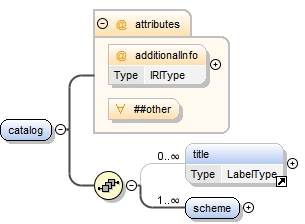
<xs:element name="catalog"><xs:annotation><xs:documentation>A local or remote catalog.</xs:documentation></xs:annotation><xs:complexType><xs:sequence><xs:element ref="title" minOccurs="0" maxOccurs="unbounded"><xs:annotation><xs:documentation>A short natural language name for the Catalog.</xs:documentation></xs:annotation></xs:element><xs:element name="scheme" maxOccurs="unbounded"><xs:annotation><xs:documentation>A scheme alias-to-URI mapping.</xs:documentation></xs:annotation><xs:complexType><xs:attribute name="alias" type="xs:NCName" use="required"><xs:annotation><xs:documentation>A short string used by the provider as a replacement for a scheme URI.</xs:documentation></xs:annotation></xs:attribute><xs:attribute name="uri" type="IRIType" use="required"><xs:annotation><xs:documentation>The URI which identifies the scheme.</xs:documentation></xs:annotation></xs:attribute><xs:anyAttribute namespace="##other" processContents="lax"/></xs:complexType></xs:element></xs:sequence><xs:attribute name="additionalInfo" type="IRIType"><xs:annotation><xs:documentation>A pointer to some additional information about the Catalog, and especially its evolution and latest version.</xs:documentation></xs:annotation></xs:attribute><xs:anyAttribute namespace="##other" processContents="lax"/><!-- EV-NAR-1.3.7: add @additionalInfo to catalog--></xs:complexType></xs:element>
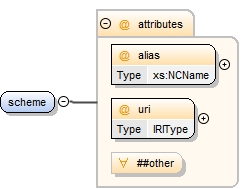
<xs:element name="scheme" maxOccurs="unbounded"><xs:annotation><xs:documentation>A scheme alias-to-URI mapping.</xs:documentation></xs:annotation><xs:complexType><xs:attribute name="alias" type="xs:NCName" use="required"><xs:annotation><xs:documentation>A short string used by the provider as a replacement for a scheme URI.</xs:documentation></xs:annotation></xs:attribute><xs:attribute name="uri" type="IRIType" use="required"><xs:annotation><xs:documentation>The URI which identifies the scheme.</xs:documentation></xs:annotation></xs:attribute><xs:anyAttribute namespace="##other" processContents="lax"/></xs:complexType></xs:element>
ANY attribute from ANY namespace OTHER than 'http://iptc.org/std/nar/2006-10-01/'
Source
<xs:element name="rightsInfo" type="RightsInfoType" minOccurs="0"><xs:annotation><xs:documentation>Expression of rights to be applied to content</xs:documentation></xs:annotation></xs:element>
The type of the concept assigned as controlled property value.
Source
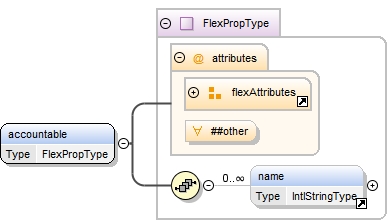
<xs:element name="accountable" type="FlexPropType"><xs:annotation><xs:documentation>An individual accountable for the content in legal terms.</xs:documentation></xs:annotation></xs:element>
Attempting to install the relevant ISO 2- and 3-letter
         codes as the enumerated possible values is probably never
         going to be a realistic possibility.  See
         RFC 3066 at http://www.ietf.org/rfc/rfc3066.txt and the IANA registry
         at http://www.iana.org/assignments/lang-tag-apps.htm for
         further information.

         The union allows for the 'un-declaration' of xml:lang with
         the empty string.
Source
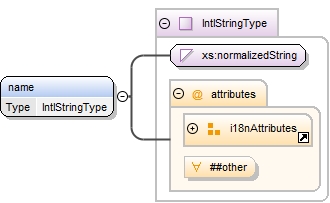
<xs:element name="name" type="IntlStringType"><xs:annotation><xs:documentation>A natural language name for the concept.</xs:documentation></xs:annotation><!-- rev3: name, definition, note and facet made global --></xs:element>
The type of the concept assigned as controlled property value.
Source
<xs:element name="copyrightHolder" type="FlexPropType"><xs:annotation><xs:documentation>The person or organisation claiming the intellectual property for the content.</xs:documentation></xs:annotation></xs:element>
Attempting to install the relevant ISO 2- and 3-letter
         codes as the enumerated possible values is probably never
         going to be a realistic possibility.  See
         RFC 3066 at http://www.ietf.org/rfc/rfc3066.txt and the IANA registry
         at http://www.iana.org/assignments/lang-tag-apps.htm for
         further information.

         The union allows for the 'un-declaration' of xml:lang with
         the empty string.
Source
<xs:element name="copyrightNotice" type="BlockType"><xs:annotation><xs:documentation>Any necessary copyright notice for claiming the intellectual property for the content.</xs:documentation></xs:annotation></xs:element>
Attempting to install the relevant ISO 2- and 3-letter
         codes as the enumerated possible values is probably never
         going to be a realistic possibility.  See
         RFC 3066 at http://www.ietf.org/rfc/rfc3066.txt and the IANA registry
         at http://www.iana.org/assignments/lang-tag-apps.htm for
         further information.

         The union allows for the 'un-declaration' of xml:lang with
         the empty string.
Source
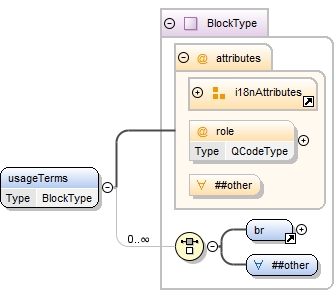
<xs:element name="usageTerms" type="BlockType"><xs:annotation><xs:documentation>A natural-language statement about the usage terms pertaining to the content.</xs:documentation></xs:annotation></xs:element>
ANY attribute from ANY namespace OTHER than 'http://iptc.org/std/nar/2006-10-01/'
Source
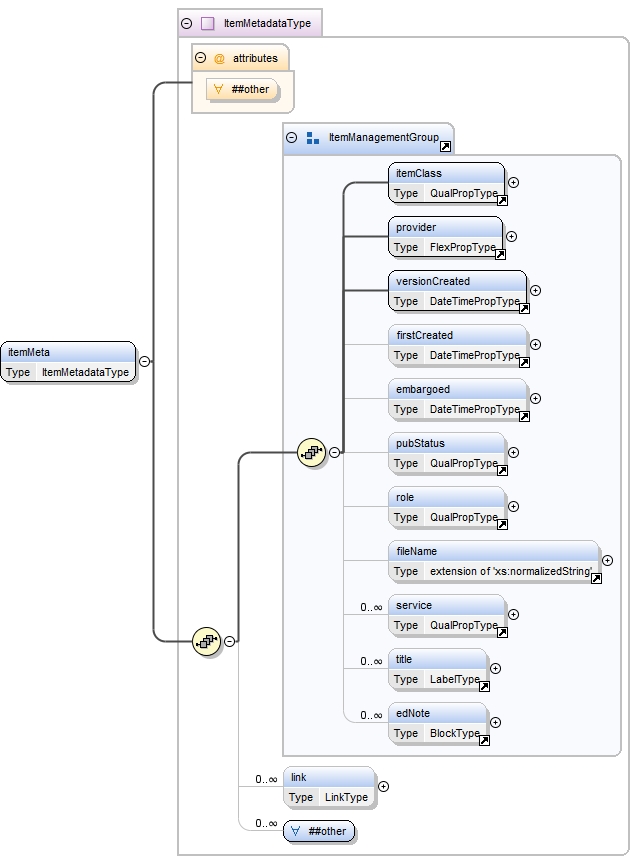
<xs:element name="itemMeta" type="ItemMetadataType"><xs:annotation><xs:documentation>A set of properties directly associated with the Item</xs:documentation></xs:annotation></xs:element>
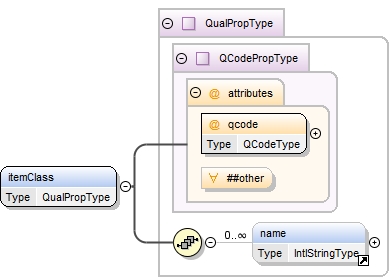
<xs:element name="itemClass" type="QualPropType"><xs:annotation><xs:documentation>The nature of the item, set in accordance with the structure of its content.</xs:documentation></xs:annotation></xs:element>
The type of the concept assigned as controlled property value.
Source
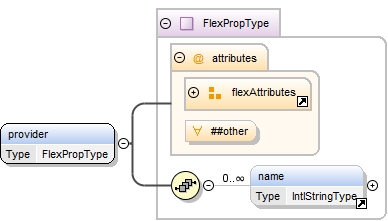
<xs:element name="provider" type="FlexPropType"><xs:annotation><xs:documentation>The party (person or organisation) responsible for the management of the Item.</xs:documentation></xs:annotation></xs:element>
ANY attribute from ANY namespace OTHER than 'http://iptc.org/std/nar/2006-10-01/'
Source
<xs:element name="versionCreated" type="DateTimePropType"><xs:annotation><xs:documentation>The date and time on which the current version of the Item was created.</xs:documentation></xs:annotation></xs:element>
ANY attribute from ANY namespace OTHER than 'http://iptc.org/std/nar/2006-10-01/'
Source
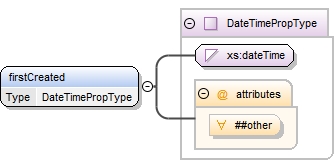
<xs:element name="firstCreated" type="DateTimePropType"><xs:annotation><xs:documentation>The date and time on which the first version of the Item was created.</xs:documentation></xs:annotation></xs:element>
ANY attribute from ANY namespace OTHER than 'http://iptc.org/std/nar/2006-10-01/'
Source
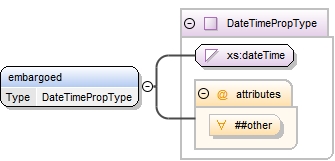
<xs:element name="embargoed" type="DateTimePropType"><xs:annotation><xs:documentation>The date and time before which all versions of the Item are embargoed. If absent, the Item is not embargoed.</xs:documentation></xs:annotation></xs:element>
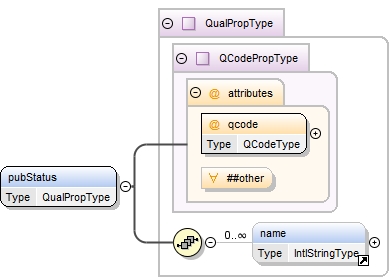
<xs:element name="pubStatus" type="QualPropType"><xs:annotation><xs:documentation>The publishing status of the Item, its value is "usable" by default.</xs:documentation></xs:annotation></xs:element>
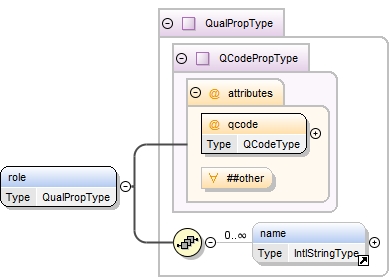
<xs:element name="role" type="QualPropType"><xs:annotation><xs:documentation>The role of the Item in the editorial workflow.</xs:documentation></xs:annotation></xs:element>
ANY attribute from ANY namespace OTHER than 'http://iptc.org/std/nar/2006-10-01/'
Source
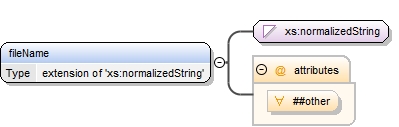
<xs:element name="fileName"><xs:annotation><xs:documentation>The recommended file name for this Item.</xs:documentation></xs:annotation><xs:complexType><xs:simpleContent><xs:extension base="xs:normalizedString"><xs:anyAttribute namespace="##other" processContents="lax"/></xs:extension></xs:simpleContent></xs:complexType></xs:element>
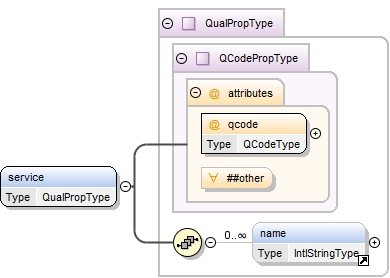
<xs:element name="service" type="QualPropType"><xs:annotation><xs:documentation>An editorial service to which an item is assigned by its provider.</xs:documentation></xs:annotation></xs:element>
Attempting to install the relevant ISO 2- and 3-letter
         codes as the enumerated possible values is probably never
         going to be a realistic possibility.  See
         RFC 3066 at http://www.ietf.org/rfc/rfc3066.txt and the IANA registry
         at http://www.iana.org/assignments/lang-tag-apps.htm for
         further information.

         The union allows for the 'un-declaration' of xml:lang with
         the empty string.
Source
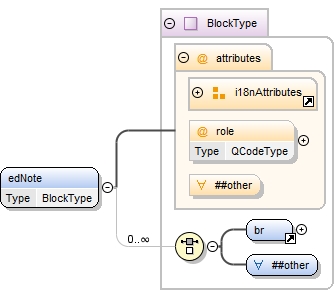
<xs:element name="edNote" type="BlockType"><xs:annotation><xs:documentation>A note addressed to the editorial people receiving the Item.</xs:documentation></xs:annotation></xs:element>
The version of the target resource. By default, the latest revision is retrieved when the link is activated.
Source
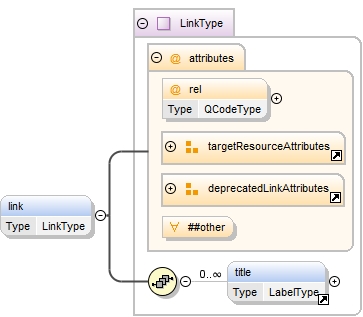
<xs:element name="link" type="LinkType" minOccurs="0" maxOccurs="unbounded"><xs:annotation><xs:documentation>A link from the current Item to a target Item or Web resource</xs:documentation></xs:annotation></xs:element>
ANY attribute from ANY namespace OTHER than 'http://iptc.org/std/nar/2006-10-01/'
Source
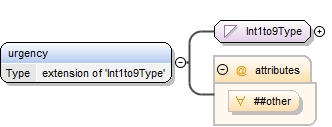
<xs:element name="urgency"><xs:annotation><xs:documentation>The editorial urgency of the content.</xs:documentation></xs:annotation><xs:complexType><xs:simpleContent><xs:extension base="Int1to9Type"><xs:anyAttribute namespace="##other" processContents="lax"/></xs:extension></xs:simpleContent></xs:complexType></xs:element>
ANY attribute from ANY namespace OTHER than 'http://iptc.org/std/nar/2006-10-01/'
Source
<xs:element name="contentCreated" type="TruncatedDateTimePropType"><xs:annotation><xs:documentation>The date (and optionally the time) on which the content was created.</xs:documentation></xs:annotation></xs:element>
ANY attribute from ANY namespace OTHER than 'http://iptc.org/std/nar/2006-10-01/'
Source
<xs:element name="contentModified" type="TruncatedDateTimePropType"><xs:annotation><xs:documentation>The date (and optionally the time) on which the content was last modified.</xs:documentation></xs:annotation></xs:element>
The type of the concept assigned as controlled property value.
Source
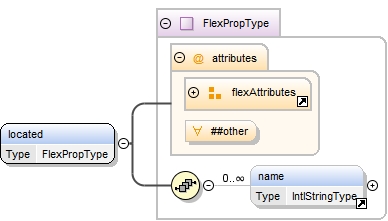
<xs:element name="located" type="FlexPropType"><xs:annotation><xs:documentation>The location from which the content originates.</xs:documentation></xs:annotation></xs:element>
The type of the concept assigned as controlled property value.
Source
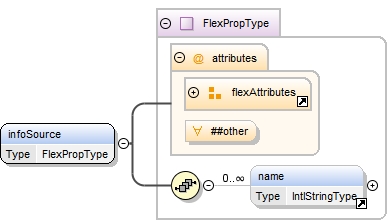
<xs:element name="infoSource" type="FlexPropType"><xs:annotation><xs:documentation>A party (person or organisation) which originated some information used to create or enhance the content.</xs:documentation></xs:annotation></xs:element>
The type of the concept assigned as controlled property value.
Source
<xs:element name="creator" type="FlexPropType"><xs:annotation><xs:documentation>A party (person or organisation) which created the resource.</xs:documentation></xs:annotation></xs:element>
The type of the concept assigned as controlled property value.
Source
<xs:element name="contributor" type="FlexPropType"><xs:annotation><xs:documentation>A party (person or organisation) which modified or enhanced the content, preferably the name of a person.</xs:documentation></xs:annotation></xs:element>
The type of the concept assigned as controlled property value.
Source
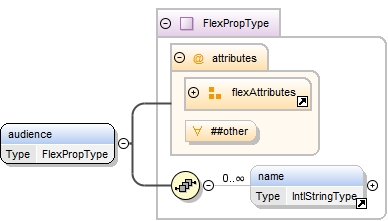
<xs:element name="audience" type="FlexPropType"><xs:annotation><xs:documentation>An intended audience for the content.</xs:documentation></xs:annotation></xs:element>
The date (and, optionally, the time) after which the concept identifier should not be applied as the value of a property anymore.
Source
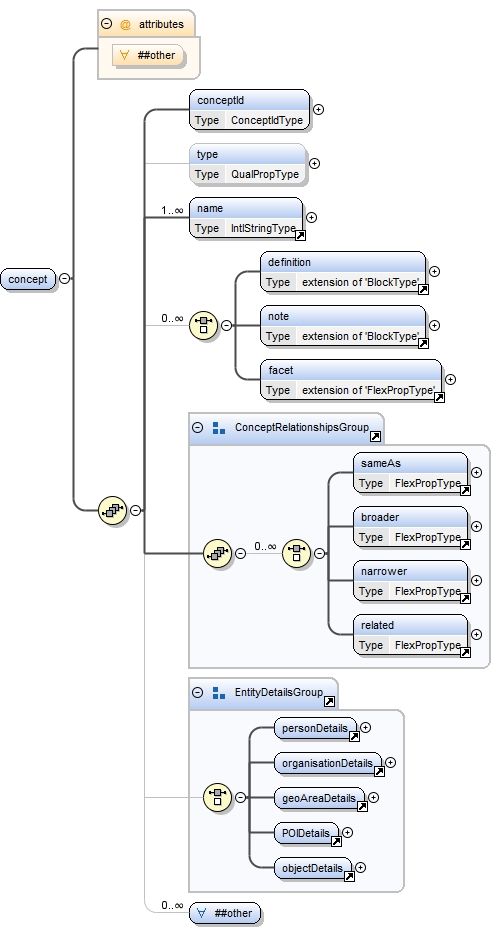
<xs:element name="conceptId" type="ConceptIdType"><xs:annotation><xs:documentation>The preferred unambiguous identifier for the concept.</xs:documentation></xs:annotation></xs:element>
<xs:element name="type" type="QualPropType" minOccurs="0"><xs:annotation><xs:documentation>The nature of the concept.</xs:documentation></xs:annotation></xs:element>
Attempting to install the relevant ISO 2- and 3-letter
         codes as the enumerated possible values is probably never
         going to be a realistic possibility.  See
         RFC 3066 at http://www.ietf.org/rfc/rfc3066.txt and the IANA registry
         at http://www.iana.org/assignments/lang-tag-apps.htm for
         further information.

         The union allows for the 'un-declaration' of xml:lang with
         the empty string.
Source
<xs:element name="definition"><xs:annotation><xs:documentation>A natural language definition of the semantics of the concept. This definition is normative only for the scope of the use of this concept.</xs:documentation></xs:annotation><xs:complexType mixed="true"><xs:complexContent mixed="true"><xs:extension base="BlockType"></xs:extension></xs:complexContent><!-- NAR 1.2 erratum 2 correction: specify mixed content--></xs:complexType></xs:element>
Attempting to install the relevant ISO 2- and 3-letter
         codes as the enumerated possible values is probably never
         going to be a realistic possibility.  See
         RFC 3066 at http://www.ietf.org/rfc/rfc3066.txt and the IANA registry
         at http://www.iana.org/assignments/lang-tag-apps.htm for
         further information.

         The union allows for the 'un-declaration' of xml:lang with
         the empty string.
Source
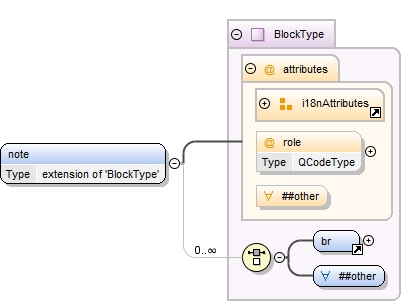
<xs:element name="note"><xs:annotation><xs:documentation>Additional natural language information about the concept.</xs:documentation></xs:annotation><xs:complexType mixed="true"><xs:complexContent mixed="true"><xs:extension base="BlockType"></xs:extension></xs:complexContent><!-- NAR 1.2 erratum 2 correction: specify mixed content--></xs:complexType></xs:element>
The type of the concept assigned as controlled property value.
Source
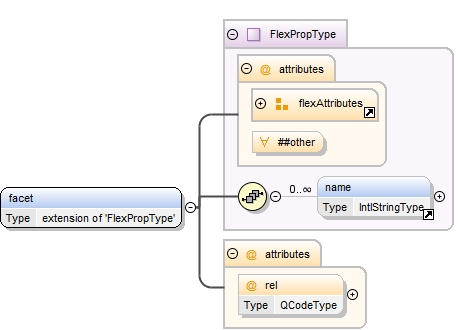
<xs:element name="facet"><xs:annotation><xs:documentation>A intrinsic property of the concept.</xs:documentation></xs:annotation><xs:complexType><xs:complexContent><xs:extension base="FlexPropType"><xs:attribute name="rel" type="QCodeType"><xs:annotation><xs:documentation>The identifier of the relationship between the current concept (containing the facet) and the concept identified by the facet value.</xs:documentation></xs:annotation></xs:attribute></xs:extension></xs:complexContent></xs:complexType></xs:element>
The type of the concept assigned as controlled property value.
Source
<xs:element name="sameAs" type="FlexPropType"><xs:annotation><xs:documentation>An identifier of a concept with equivalent semantics</xs:documentation></xs:annotation></xs:element>
The type of the concept assigned as controlled property value.
Source
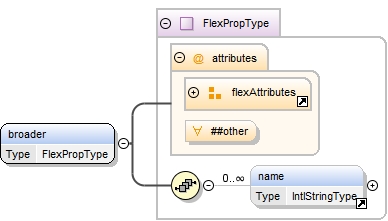
<xs:element name="broader" type="FlexPropType"><xs:annotation><xs:documentation>An identifier of a more generic concept.</xs:documentation></xs:annotation></xs:element>
The type of the concept assigned as controlled property value.
Source
<xs:element name="narrower" type="FlexPropType"><xs:annotation><xs:documentation>An identifier of a more specific concept.</xs:documentation></xs:annotation></xs:element>
The type of the concept assigned as controlled property value.
Source
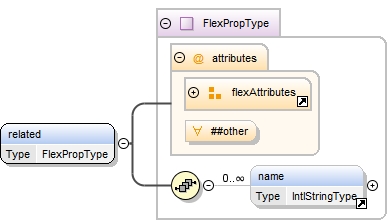
<xs:element name="related" type="FlexPropType"><xs:annotation><xs:documentation>An identifier of a related concept, where the relationship is different from 'sameAs', 'broader' or 'narrower'.</xs:documentation></xs:annotation></xs:element>
ANY attribute from ANY namespace OTHER than 'http://iptc.org/std/nar/2006-10-01/'
Source
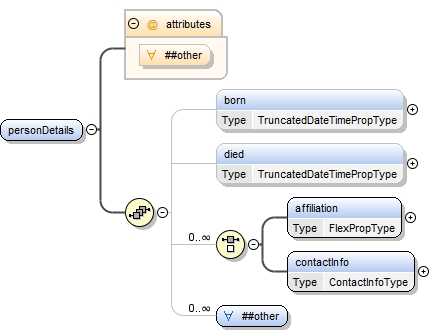
<xs:element name="personDetails"><xs:annotation><xs:documentation>A set of properties specific to a person</xs:documentation></xs:annotation><xs:complexType><xs:sequence><xs:element name="born" type="TruncatedDateTimePropType" minOccurs="0"><xs:annotation><xs:documentation>The date the person was born.</xs:documentation></xs:annotation></xs:element><xs:element name="died" type="TruncatedDateTimePropType" minOccurs="0"><xs:annotation><xs:documentation>The date the person died.</xs:documentation></xs:annotation></xs:element><xs:choice minOccurs="0" maxOccurs="unbounded"><xs:element name="affiliation" type="FlexPropType"><xs:annotation><xs:documentation>An affiliation of the person with an organisation.</xs:documentation></xs:annotation></xs:element><xs:element name="contactInfo" type="ContactInfoType"><xs:annotation><xs:documentation>Information how to contact the person.</xs:documentation></xs:annotation></xs:element></xs:choice><xs:any namespace="##other" processContents="lax" minOccurs="0" maxOccurs="unbounded"/></xs:sequence><xs:anyAttribute namespace="##other" processContents="lax"/></xs:complexType></xs:element>
ANY attribute from ANY namespace OTHER than 'http://iptc.org/std/nar/2006-10-01/'
Source
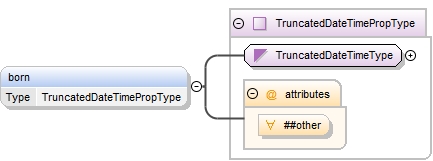
<xs:element name="born" type="TruncatedDateTimePropType" minOccurs="0"><xs:annotation><xs:documentation>The date the person was born.</xs:documentation></xs:annotation></xs:element>
ANY attribute from ANY namespace OTHER than 'http://iptc.org/std/nar/2006-10-01/'
Source
<xs:element name="died" type="TruncatedDateTimePropType" minOccurs="0"><xs:annotation><xs:documentation>The date the person died.</xs:documentation></xs:annotation></xs:element>
The type of the concept assigned as controlled property value.
Source
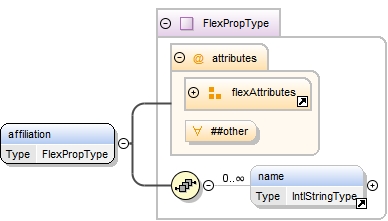
<xs:element name="affiliation" type="FlexPropType"><xs:annotation><xs:documentation>An affiliation of the person with an organisation.</xs:documentation></xs:annotation></xs:element>
A refinement of the semantics of a contact information.
Source
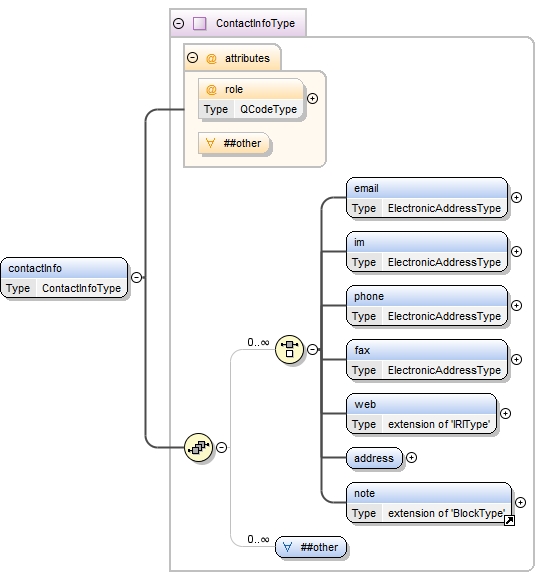
<xs:element name="contactInfo" type="ContactInfoType"><xs:annotation><xs:documentation>Information how to contact the person.</xs:documentation></xs:annotation></xs:element>
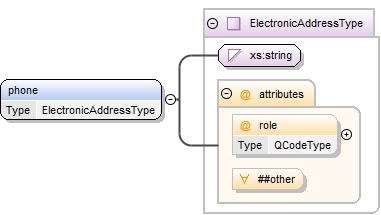
A refinement of the semantics of the electronic address.
Source
<xs:element name="phone" type="ElectronicAddressType"><xs:annotation><xs:documentation>A phone number, preferred in an international format.</xs:documentation></xs:annotation></xs:element>
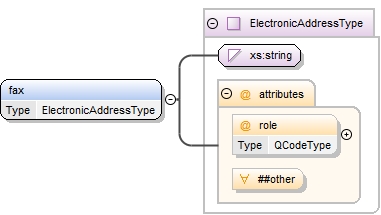
A refinement of the semantics of the electronic address.
Source
<xs:element name="fax" type="ElectronicAddressType"><xs:annotation><xs:documentation>A fax number, preferred in an international format.</xs:documentation></xs:annotation></xs:element>
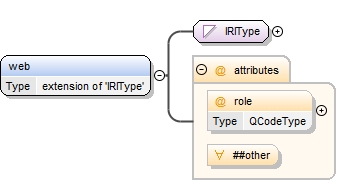
<xs:element name="web"><xs:annotation><xs:documentation>A web address.</xs:documentation></xs:annotation><xs:complexType><xs:simpleContent><xs:extension base="IRIType"><xs:attribute name="role" type="QCodeType"><xs:annotation><xs:documentation>A refinement of the semantics of the web address.</xs:documentation></xs:annotation></xs:attribute><xs:anyAttribute namespace="##other" processContents="lax"/></xs:extension></xs:simpleContent></xs:complexType></xs:element>
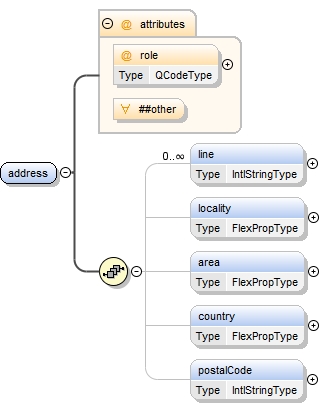
A refinement of the semantics of the postal address.
Source
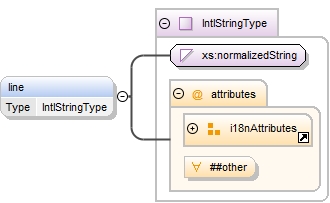
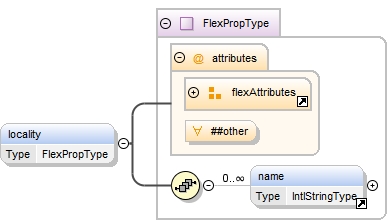
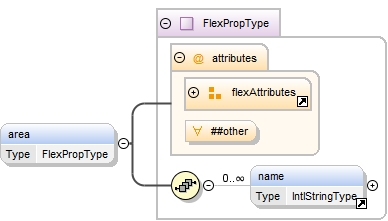
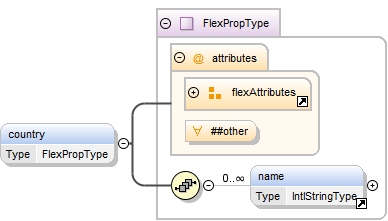
<xs:element name="address"><xs:annotation><xs:documentation>A postal address.</xs:documentation></xs:annotation><xs:complexType><xs:sequence><xs:element name="line" type="IntlStringType" minOccurs="0" maxOccurs="unbounded"><xs:annotation><xs:documentation>A line of address information, in the format expected by a recipient postal service. City, country area, country and postal code are expressed separately.</xs:documentation></xs:annotation></xs:element><xs:element name="locality" type="FlexPropType" minOccurs="0"><xs:annotation><xs:documentation>A city/town/village etc. part of the address.</xs:documentation></xs:annotation></xs:element><xs:element name="area" type="FlexPropType" minOccurs="0"><xs:annotation><xs:documentation>A subdivision of a country part of the address.</xs:documentation></xs:annotation></xs:element><xs:element name="country" type="FlexPropType" minOccurs="0"><xs:annotation><xs:documentation>A country part of the address.</xs:documentation></xs:annotation></xs:element><xs:element name="postalCode" type="IntlStringType" minOccurs="0"><xs:annotation><xs:documentation>A postal code part of the address.</xs:documentation></xs:annotation></xs:element></xs:sequence><xs:attribute name="role" type="QCodeType"><xs:annotation><xs:documentation>A refinement of the semantics of the postal address.</xs:documentation></xs:annotation></xs:attribute><xs:anyAttribute namespace="##other" processContents="lax"/></xs:complexType></xs:element>
A line of address information, in the format expected by a recipient postal service. City, country area, country and postal code are expressed separately.
Attempting to install the relevant ISO 2- and 3-letter
         codes as the enumerated possible values is probably never
         going to be a realistic possibility.  See
         RFC 3066 at http://www.ietf.org/rfc/rfc3066.txt and the IANA registry
         at http://www.iana.org/assignments/lang-tag-apps.htm for
         further information.

         The union allows for the 'un-declaration' of xml:lang with
         the empty string.
Source
<xs:element name="line" type="IntlStringType" minOccurs="0" maxOccurs="unbounded"><xs:annotation><xs:documentation>A line of address information, in the format expected by a recipient postal service. City, country area, country and postal code are expressed separately.</xs:documentation></xs:annotation></xs:element>
The type of the concept assigned as controlled property value.
Source
<xs:element name="locality" type="FlexPropType" minOccurs="0"><xs:annotation><xs:documentation>A city/town/village etc. part of the address.</xs:documentation></xs:annotation></xs:element>
The type of the concept assigned as controlled property value.
Source
<xs:element name="area" type="FlexPropType" minOccurs="0"><xs:annotation><xs:documentation>A subdivision of a country part of the address.</xs:documentation></xs:annotation></xs:element>
The type of the concept assigned as controlled property value.
Source
<xs:element name="country" type="FlexPropType" minOccurs="0"><xs:annotation><xs:documentation>A country part of the address.</xs:documentation></xs:annotation></xs:element>
Attempting to install the relevant ISO 2- and 3-letter
         codes as the enumerated possible values is probably never
         going to be a realistic possibility.  See
         RFC 3066 at http://www.ietf.org/rfc/rfc3066.txt and the IANA registry
         at http://www.iana.org/assignments/lang-tag-apps.htm for
         further information.

         The union allows for the 'un-declaration' of xml:lang with
         the empty string.
Source
<xs:element name="postalCode" type="IntlStringType" minOccurs="0"><xs:annotation><xs:documentation>A postal code part of the address.</xs:documentation></xs:annotation></xs:element>
ANY attribute from ANY namespace OTHER than 'http://iptc.org/std/nar/2006-10-01/'
Source
<xs:element name="organisationDetails"><xs:annotation><xs:documentation>A group of properties specific to an organisation</xs:documentation></xs:annotation><xs:complexType><xs:sequence><xs:element name="founded" type="TruncatedDateTimePropType" minOccurs="0"><xs:annotation><xs:documentation>The date the organisation was founded/established.</xs:documentation></xs:annotation></xs:element><xs:element name="dissolved" type="TruncatedDateTimePropType" minOccurs="0"><xs:annotation><xs:documentation>The date the organisation was dissolved.</xs:documentation></xs:annotation></xs:element><xs:choice minOccurs="0" maxOccurs="unbounded"><xs:element name="location" type="FlexPropType"><xs:annotation><xs:documentation>A place where the organisation is located.</xs:documentation></xs:annotation></xs:element><xs:element name="contactInfo" type="ContactInfoType"><xs:annotation><xs:documentation>Information how to contact the organisation.</xs:documentation></xs:annotation></xs:element></xs:choice><xs:any namespace="##other" processContents="lax" minOccurs="0" maxOccurs="unbounded"/></xs:sequence><xs:anyAttribute namespace="##other" processContents="lax"/></xs:complexType></xs:element>
ANY attribute from ANY namespace OTHER than 'http://iptc.org/std/nar/2006-10-01/'
Source
<xs:element name="founded" type="TruncatedDateTimePropType" minOccurs="0"><xs:annotation><xs:documentation>The date the organisation was founded/established.</xs:documentation></xs:annotation></xs:element>
ANY attribute from ANY namespace OTHER than 'http://iptc.org/std/nar/2006-10-01/'
Source
<xs:element name="dissolved" type="TruncatedDateTimePropType" minOccurs="0"><xs:annotation><xs:documentation>The date the organisation was dissolved.</xs:documentation></xs:annotation></xs:element>
The type of the concept assigned as controlled property value.
Source
<xs:element name="location" type="FlexPropType"><xs:annotation><xs:documentation>A place where the organisation is located.</xs:documentation></xs:annotation></xs:element>
A refinement of the semantics of a contact information.
Source
<xs:element name="contactInfo" type="ContactInfoType"><xs:annotation><xs:documentation>Information how to contact the organisation.</xs:documentation></xs:annotation></xs:element>
ANY attribute from ANY namespace OTHER than 'http://iptc.org/std/nar/2006-10-01/'
Source
<xs:element name="geoAreaDetails"><xs:annotation><xs:documentation>A group of properties specific to a geopolitical area</xs:documentation></xs:annotation><xs:complexType><xs:sequence><xs:element name="position" type="GeoCoordinatesType" minOccurs="0"><xs:annotation><xs:documentation>The coordinates of the location</xs:documentation></xs:annotation></xs:element><xs:any namespace="##other" processContents="lax" minOccurs="0" maxOccurs="unbounded"/></xs:sequence><xs:anyAttribute namespace="##other" processContents="lax"/></xs:complexType></xs:element>
<xs:element name="position" type="GeoCoordinatesType" minOccurs="0"><xs:annotation><xs:documentation>The coordinates of the location</xs:documentation></xs:annotation></xs:element>
ANY attribute from ANY namespace OTHER than 'http://iptc.org/std/nar/2006-10-01/'
Source
<xs:element name="POIDetails"><xs:annotation><xs:documentation>A group of properties specific to a point of interest</xs:documentation></xs:annotation><xs:complexType><xs:sequence><xs:element name="position" type="GeoCoordinatesType" minOccurs="0"><xs:annotation><xs:documentation>The coordinates of the location</xs:documentation></xs:annotation></xs:element><xs:element name="openHours" type="LabelType" minOccurs="0"><xs:annotation><xs:documentation>Opening hours of the point of interest expressed in natural language</xs:documentation></xs:annotation></xs:element><xs:element name="capacity" type="LabelType" minOccurs="0"><xs:annotation><xs:documentation>Total capacity of the point of interest expressed in natural language</xs:documentation></xs:annotation></xs:element><xs:choice minOccurs="0" maxOccurs="unbounded"><xs:element name="contactInfo" type="ContactInfoType"><xs:annotation><xs:documentation>Information how to contact the point of interest.</xs:documentation></xs:annotation></xs:element><xs:element name="access" type="BlockType"><xs:annotation><xs:documentation>Ways to access the place of the point of interest, including directions.</xs:documentation></xs:annotation></xs:element><xs:element name="details" type="BlockType"><xs:annotation><xs:documentation>Detailed information about the location of the point of interest.</xs:documentation></xs:annotation></xs:element></xs:choice><xs:any namespace="##other" processContents="lax" minOccurs="0" maxOccurs="unbounded"/></xs:sequence><xs:anyAttribute namespace="##other" processContents="lax"/></xs:complexType></xs:element>
<xs:element name="position" type="GeoCoordinatesType" minOccurs="0"><xs:annotation><xs:documentation>The coordinates of the location</xs:documentation></xs:annotation></xs:element>
Attempting to install the relevant ISO 2- and 3-letter
         codes as the enumerated possible values is probably never
         going to be a realistic possibility.  See
         RFC 3066 at http://www.ietf.org/rfc/rfc3066.txt and the IANA registry
         at http://www.iana.org/assignments/lang-tag-apps.htm for
         further information.

         The union allows for the 'un-declaration' of xml:lang with
         the empty string.
Source
<xs:element name="openHours" type="LabelType" minOccurs="0"><xs:annotation><xs:documentation>Opening hours of the point of interest expressed in natural language</xs:documentation></xs:annotation></xs:element>
Attempting to install the relevant ISO 2- and 3-letter
         codes as the enumerated possible values is probably never
         going to be a realistic possibility.  See
         RFC 3066 at http://www.ietf.org/rfc/rfc3066.txt and the IANA registry
         at http://www.iana.org/assignments/lang-tag-apps.htm for
         further information.

         The union allows for the 'un-declaration' of xml:lang with
         the empty string.
Source
<xs:element name="capacity" type="LabelType" minOccurs="0"><xs:annotation><xs:documentation>Total capacity of the point of interest expressed in natural language</xs:documentation></xs:annotation></xs:element>
A refinement of the semantics of a contact information.
Source
<xs:element name="contactInfo" type="ContactInfoType"><xs:annotation><xs:documentation>Information how to contact the point of interest.</xs:documentation></xs:annotation></xs:element>
Attempting to install the relevant ISO 2- and 3-letter
         codes as the enumerated possible values is probably never
         going to be a realistic possibility.  See
         RFC 3066 at http://www.ietf.org/rfc/rfc3066.txt and the IANA registry
         at http://www.iana.org/assignments/lang-tag-apps.htm for
         further information.

         The union allows for the 'un-declaration' of xml:lang with
         the empty string.
Source
<xs:element name="access" type="BlockType"><xs:annotation><xs:documentation>Ways to access the place of the point of interest, including directions.</xs:documentation></xs:annotation></xs:element>
Attempting to install the relevant ISO 2- and 3-letter
         codes as the enumerated possible values is probably never
         going to be a realistic possibility.  See
         RFC 3066 at http://www.ietf.org/rfc/rfc3066.txt and the IANA registry
         at http://www.iana.org/assignments/lang-tag-apps.htm for
         further information.

         The union allows for the 'un-declaration' of xml:lang with
         the empty string.
Source
<xs:element name="details" type="BlockType"><xs:annotation><xs:documentation>Detailed information about the location of the point of interest.</xs:documentation></xs:annotation></xs:element>
ANY attribute from ANY namespace OTHER than 'http://iptc.org/std/nar/2006-10-01/'
Source
<xs:element name="objectDetails"><xs:annotation><xs:documentation>A group of properties specific to an object</xs:documentation></xs:annotation><xs:complexType><xs:sequence><xs:element ref="created" minOccurs="0"/><xs:choice minOccurs="0" maxOccurs="unbounded"><xs:element ref="copyrightNotice"/><xs:element ref="creator"/></xs:choice><xs:any namespace="##other" processContents="lax" minOccurs="0" maxOccurs="unbounded"/></xs:sequence><xs:anyAttribute namespace="##other" processContents="lax"/></xs:complexType></xs:element>
ANY attribute from ANY namespace OTHER than 'http://iptc.org/std/nar/2006-10-01/'
Source
<xs:element name="created" type="TruncatedDateTimePropType"><xs:annotation><xs:documentation>The date (and optionally the time) on which the resource was created.</xs:documentation></xs:annotation></xs:element>
The language tag. Values must be valid BCP 47 language tags
Source
<xs:element name="language"><xs:annotation><xs:documentation>A language used by the news content</xs:documentation></xs:annotation><xs:complexType><xs:sequence><xs:element name="name" type="IntlStringType" minOccurs="0" maxOccurs="unbounded"><xs:annotation><xs:documentation>A name for a concept assigned as property value.</xs:documentation></xs:annotation></xs:element></xs:sequence><xs:attribute name="tag" type="xs:language" use="required"><xs:annotation><!-- v1.2 : modification of the definition--><xs:documentation>The language tag. Values must be valid BCP 47 language tags</xs:documentation></xs:annotation></xs:attribute><xs:anyAttribute namespace="##other" processContents="lax"/></xs:complexType></xs:element>
Attempting to install the relevant ISO 2- and 3-letter
         codes as the enumerated possible values is probably never
         going to be a realistic possibility.  See
         RFC 3066 at http://www.ietf.org/rfc/rfc3066.txt and the IANA registry
         at http://www.iana.org/assignments/lang-tag-apps.htm for
         further information.

         The union allows for the 'un-declaration' of xml:lang with
         the empty string.
Source
<xs:element name="name" type="IntlStringType" minOccurs="0" maxOccurs="unbounded"><xs:annotation><xs:documentation>A name for a concept assigned as property value.</xs:documentation></xs:annotation></xs:element>
The type of the concept assigned as controlled property value.
Source
<xs:element name="genre" type="FlexPropType"><xs:annotation><xs:documentation>A nature, intellectual or journalistic form of the content</xs:documentation></xs:annotation></xs:element>
The type of the concept assigned as controlled property value.
Source
<xs:element name="subject" type="FlexPropType"><xs:annotation><xs:documentation>An important topic of the content; what the content is about</xs:documentation></xs:annotation></xs:element>
Attempting to install the relevant ISO 2- and 3-letter
         codes as the enumerated possible values is probably never
         going to be a realistic possibility.  See
         RFC 3066 at http://www.ietf.org/rfc/rfc3066.txt and the IANA registry
         at http://www.iana.org/assignments/lang-tag-apps.htm for
         further information.

         The union allows for the 'un-declaration' of xml:lang with
         the empty string.
Source
<xs:element name="slugline"><xs:annotation><xs:documentation>A sequence of tokens associated with the content. The interpretation is provider specific</xs:documentation></xs:annotation><xs:complexType><xs:simpleContent><xs:extension base="IntlStringType"><xs:attribute name="separator" type="xs:string"><xs:annotation><xs:documentation>The character string acting as a separator between the tokens in the slugline.</xs:documentation></xs:annotation></xs:attribute></xs:extension></xs:simpleContent></xs:complexType></xs:element>
Attempting to install the relevant ISO 2- and 3-letter
         codes as the enumerated possible values is probably never
         going to be a realistic possibility.  See
         RFC 3066 at http://www.ietf.org/rfc/rfc3066.txt and the IANA registry
         at http://www.iana.org/assignments/lang-tag-apps.htm for
         further information.

         The union allows for the 'un-declaration' of xml:lang with
         the empty string.
Source
<xs:element name="headline" type="LabelType"><xs:annotation><xs:documentation>A brief and snappy introduction to the news content, designed to catch the reader's attention</xs:documentation></xs:annotation></xs:element>
Attempting to install the relevant ISO 2- and 3-letter
         codes as the enumerated possible values is probably never
         going to be a realistic possibility.  See
         RFC 3066 at http://www.ietf.org/rfc/rfc3066.txt and the IANA registry
         at http://www.iana.org/assignments/lang-tag-apps.htm for
         further information.

         The union allows for the 'un-declaration' of xml:lang with
         the empty string.
Source
<xs:element name="dateline" type="LabelType"><xs:annotation><xs:documentation>A natural-language statement of the date and/or place of creation of the content</xs:documentation></xs:annotation></xs:element>
Attempting to install the relevant ISO 2- and 3-letter
         codes as the enumerated possible values is probably never
         going to be a realistic possibility.  See
         RFC 3066 at http://www.ietf.org/rfc/rfc3066.txt and the IANA registry
         at http://www.iana.org/assignments/lang-tag-apps.htm for
         further information.

         The union allows for the 'un-declaration' of xml:lang with
         the empty string.
Source
<xs:element name="by" type="LabelType"><xs:annotation><xs:documentation>A natural-language statement about the creator (author, photographer etc.) of the content</xs:documentation></xs:annotation></xs:element>
Attempting to install the relevant ISO 2- and 3-letter
         codes as the enumerated possible values is probably never
         going to be a realistic possibility.  See
         RFC 3066 at http://www.ietf.org/rfc/rfc3066.txt and the IANA registry
         at http://www.iana.org/assignments/lang-tag-apps.htm for
         further information.

         The union allows for the 'un-declaration' of xml:lang with
         the empty string.
Source
<xs:element name="creditline" type="IntlStringType"><xs:annotation><xs:documentation>A free-form expression of the credit(s) for the content</xs:documentation></xs:annotation></xs:element>
Attempting to install the relevant ISO 2- and 3-letter
         codes as the enumerated possible values is probably never
         going to be a realistic possibility.  See
         RFC 3066 at http://www.ietf.org/rfc/rfc3066.txt and the IANA registry
         at http://www.iana.org/assignments/lang-tag-apps.htm for
         further information.

         The union allows for the 'un-declaration' of xml:lang with
         the empty string.
Source
<xs:element name="description" type="BlockType"><xs:annotation><xs:documentation>A free-form textual description of the content of the item</xs:documentation></xs:annotation></xs:element>
The BYSETPOS rule part specifies a space separated list of values which corresponds to the nth occurrence
   within the set of events specified by the rule.
ANY attribute from ANY namespace OTHER than 'http://iptc.org/std/nar/2006-10-01/'
Source
<xs:element name="exDate" type="DateOptTimePropType"><xs:annotation><xs:documentation>Explicit dates to be excluded from any recurrence.</xs:documentation></xs:annotation></xs:element>
The BYSETPOS rule part specifies a space separated list of values which corresponds to the nth occurrence
   within the set of events specified by the rule.
The WKST rule part specifies the day on which the workweek starts.
Source
<xs:element name="exRule"><xs:annotation><xs:documentation>Rule for dates to be excluded from recurrence.</xs:documentation></xs:annotation><xs:complexType><xs:attributeGroup ref="recurrenceRuleAttributes"/><xs:anyAttribute namespace="##other" processContents="lax"/></xs:complexType></xs:element>
Attempting to install the relevant ISO 2- and 3-letter
         codes as the enumerated possible values is probably never
         going to be a realistic possibility.  See
         RFC 3066 at http://www.ietf.org/rfc/rfc3066.txt and the IANA registry
         at http://www.iana.org/assignments/lang-tag-apps.htm for
         further information.

         The union allows for the 'un-declaration' of xml:lang with
         the empty string.
Source
<xs:complexType name="AnyItemType" abstract="true" block="restriction"><xs:annotation><xs:documentation>An abstract class. All G2 items are inherited from this class.</xs:documentation></xs:annotation><xs:sequence><xs:choice maxOccurs="unbounded"><xs:element name="catalogRef"><xs:annotation><xs:documentation>A reference to a remote catalog. A hyperlink to a set of scheme alias declarations.</xs:documentation></xs:annotation><xs:complexType><xs:sequence><xs:element ref="title" minOccurs="0" maxOccurs="unbounded"><xs:annotation><xs:documentation>A short natural language name for the catalog.</xs:documentation></xs:annotation></xs:element></xs:sequence><xs:attribute name="href" type="IRIType" use="required"><xs:annotation><xs:documentation>A hyperlink to a remote Catalog.</xs:documentation></xs:annotation></xs:attribute><xs:anyAttribute namespace="##other" processContents="lax"><xs:annotation><xs:documentation>Any other attributes from other namespaces.</xs:documentation></xs:annotation></xs:anyAttribute></xs:complexType></xs:element><xs:element ref="catalog"/></xs:choice><xs:element name="rightsInfo" type="RightsInfoType" minOccurs="0"><xs:annotation><xs:documentation>Expression of rights to be applied to content</xs:documentation></xs:annotation></xs:element><xs:element name="itemMeta" type="ItemMetadataType"><xs:annotation><xs:documentation>A set of properties directly associated with the Item</xs:documentation></xs:annotation></xs:element></xs:sequence><xs:attribute name="standard" type="xs:string" use="required"><xs:annotation><xs:documentation>The IPTC standard with which the Item is conformant.</xs:documentation></xs:annotation></xs:attribute><xs:attribute name="standardversion" use="required"><xs:annotation><xs:documentation>The major-minor version of the IPTC standard with which the Item is conformant.</xs:documentation></xs:annotation><xs:simpleType><xs:restriction base="xs:string"><xs:pattern value="[0-9]+\.[0-9]+"/></xs:restriction></xs:simpleType></xs:attribute><xs:attribute name="conformance" type="xs:string" default="core"><xs:annotation><xs:documentation>The conformance level with which the Item is conformant.</xs:documentation></xs:annotation></xs:attribute><xs:attribute name="guid" type="xs:string" use="required"><xs:annotation><xs:documentation>The persistent, universally unique identifier common for all versions of the Item.</xs:documentation></xs:annotation></xs:attribute><xs:attribute name="version" type="xs:positiveInteger" default="1"><xs:annotation><xs:documentation>The version of the Item.</xs:documentation></xs:annotation></xs:attribute><xs:attributeGroup ref="i18nAttributes"/><xs:anyAttribute namespace="##other" processContents="lax"/><!-- rev3 : schema renamed standardversion --></xs:complexType>
Attempting to install the relevant ISO 2- and 3-letter
         codes as the enumerated possible values is probably never
         going to be a realistic possibility.  See
         RFC 3066 at http://www.ietf.org/rfc/rfc3066.txt and the IANA registry
         at http://www.iana.org/assignments/lang-tag-apps.htm for
         further information.

         The union allows for the 'un-declaration' of xml:lang with
         the empty string.
Source
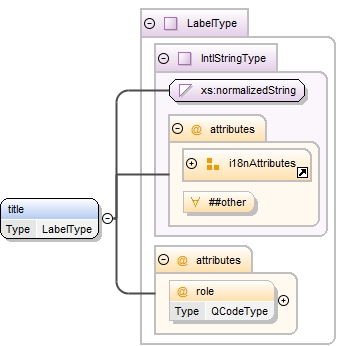
<xs:complexType name="LabelType"><xs:annotation><xs:documentation>The CCL-type for information about the content as natural language string with minimal markup</xs:documentation></xs:annotation><xs:simpleContent><xs:extension base="IntlStringType"><xs:attribute name="role" type="QCodeType"><xs:annotation><xs:documentation>A refinement of the semantics of the label.</xs:documentation></xs:annotation></xs:attribute></xs:extension></xs:simpleContent></xs:complexType>
Attempting to install the relevant ISO 2- and 3-letter
         codes as the enumerated possible values is probably never
         going to be a realistic possibility.  See
         RFC 3066 at http://www.ietf.org/rfc/rfc3066.txt and the IANA registry
         at http://www.iana.org/assignments/lang-tag-apps.htm for
         further information.

         The union allows for the 'un-declaration' of xml:lang with
         the empty string.
Source
<xs:complexType name="IntlStringType"><xs:annotation><xs:documentation>The type for an internationalized string, where the language and directionality in which the information is writte are indirected</xs:documentation></xs:annotation><xs:simpleContent><xs:extension base="xs:normalizedString"><xs:attributeGroup ref="i18nAttributes"/><xs:anyAttribute namespace="##other" processContents="lax"/></xs:extension></xs:simpleContent></xs:complexType>
The type of a qualified code, i.e. a scheme alias, followed by a colon (“:”), followed by a code. A string of this type cannot contain white space characters. The code may contain colons.
The Backus Naur Form (BNF) expression for this is:<qcode> ::= <scheme> ":" <code><scheme> is a string containing any character except white space or the ':' character, required <code> is a string containing any character except white space, required
<xs:simpleType name="QCodeType"><xs:annotation><xs:documentation>The type of a qualified code, i.e. a scheme alias, followed by a colon (“:”), followed by a code. A string of this type cannot contain white space characters. The code may contain colons.</xs:documentation><xs:documentation>The Backus Naur Form (BNF) expression for this is: <qcode> ::= <scheme> ":" <code> <scheme> is a string containing any character except white space or the ':' character, required <code> is a string containing any character except white space, required</xs:documentation></xs:annotation><xs:restriction base="xs:string"><xs:pattern value="[^\s:]+:[^\s]+"/></xs:restriction></xs:simpleType>
<xs:simpleType name="IRIType"><xs:annotation><xs:documentation>The type of an Internationalized Resource Identifier Reference, as defined in RFC 3987. Identical to xs : anyURI.</xs:documentation></xs:annotation><xs:restriction base="xs:anyURI"/></xs:simpleType>
ANY attribute from ANY namespace OTHER than 'http://iptc.org/std/nar/2006-10-01/'
Source
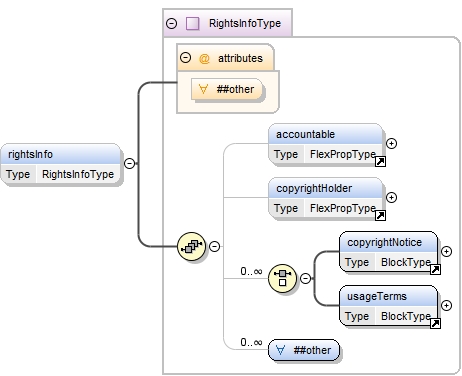
<xs:complexType name="RightsInfoType"><xs:annotation><xs:documentation>The type for a set of properties representing the rights associated with the Item (Type defined in this XML Schema only)</xs:documentation></xs:annotation><xs:sequence><xs:element ref="accountable" minOccurs="0"/><xs:element ref="copyrightHolder" minOccurs="0"/><xs:choice minOccurs="0" maxOccurs="unbounded"><xs:element ref="copyrightNotice"/><xs:element ref="usageTerms"/></xs:choice><xs:any namespace="##other" processContents="lax" minOccurs="0" maxOccurs="unbounded"/></xs:sequence><xs:anyAttribute namespace="##other" processContents="lax"/></xs:complexType>
The type of the concept assigned as controlled property value.
Source
<xs:complexType name="FlexPropType"><xs:annotation><xs:documentation>Flexible generic type for both controlled and uncontrolled values</xs:documentation></xs:annotation><xs:sequence><xs:element ref="name" minOccurs="0" maxOccurs="unbounded"/></xs:sequence><xs:attributeGroup ref="flexAttributes"/><xs:anyAttribute namespace="##other" processContents="lax"/></xs:complexType>
Attempting to install the relevant ISO 2- and 3-letter
         codes as the enumerated possible values is probably never
         going to be a realistic possibility.  See
         RFC 3066 at http://www.ietf.org/rfc/rfc3066.txt and the IANA registry
         at http://www.iana.org/assignments/lang-tag-apps.htm for
         further information.

         The union allows for the 'un-declaration' of xml:lang with
         the empty string.
Source
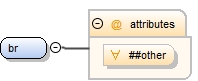
<xs:complexType name="BlockType" mixed="true"><xs:annotation><xs:documentation>The type for nformation about the content as natural language string with minimal markup and line breaks</xs:documentation></xs:annotation><xs:choice minOccurs="0" maxOccurs="unbounded"><xs:element ref="br"/><xs:any namespace="##other" processContents="lax"/></xs:choice><xs:attributeGroup ref="i18nAttributes"/><xs:attribute name="role" type="QCodeType"><xs:annotation><xs:documentation>A refinement of the semantics of the block.</xs:documentation></xs:annotation></xs:attribute><xs:anyAttribute namespace="##other" processContents="lax"/></xs:complexType>
ANY attribute from ANY namespace OTHER than 'http://iptc.org/std/nar/2006-10-01/'
Source
<xs:complexType name="ItemMetadataType"><xs:annotation><xs:documentation>The type for a set of properties directly associated with the item (Type defined in this XML Schema only)</xs:documentation></xs:annotation><xs:sequence><xs:group ref="ItemManagementGroup"/><xs:element name="link" type="LinkType" minOccurs="0" maxOccurs="unbounded"><xs:annotation><xs:documentation>A link from the current Item to a target Item or Web resource</xs:documentation></xs:annotation></xs:element><xs:any namespace="##other" processContents="lax" minOccurs="0" maxOccurs="unbounded"/></xs:sequence><xs:anyAttribute namespace="##other" processContents="lax"/></xs:complexType>
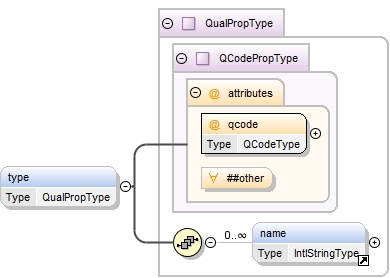
<xs:complexType name="QualPropType"><xs:annotation><xs:documentation>Type type for a property with a QCode value in a qcode attribute and optional names</xs:documentation></xs:annotation><xs:complexContent><xs:extension base="QCodePropType"><xs:sequence><!-- NAR1.1 rev3 : use newly defined global name --><xs:element ref="name" minOccurs="0" maxOccurs="unbounded"/></xs:sequence></xs:extension></xs:complexContent></xs:complexType>
<xs:complexType name="QCodePropType"><xs:annotation><xs:documentation>The type for a property with a QCode value in a qcode attribute</xs:documentation></xs:annotation><xs:attribute name="qcode" type="QCodeType" use="required"><xs:annotation><xs:documentation>A qualified code which identifies a concept.</xs:documentation></xs:annotation></xs:attribute><xs:anyAttribute namespace="##other" processContents="lax"/></xs:complexType>
ANY attribute from ANY namespace OTHER than 'http://iptc.org/std/nar/2006-10-01/'
Source
<xs:complexType name="DateTimePropType"><xs:annotation><xs:documentation>The type of a property with date and time</xs:documentation></xs:annotation><xs:simpleContent><xs:extension base="xs:dateTime"><xs:anyAttribute namespace="##other" processContents="lax"/></xs:extension><!-- version 2: editAttributes added--></xs:simpleContent></xs:complexType>
The version of the target resource. By default, the latest revision is retrieved when the link is activated.
Source
<xs:complexType name="LinkType"><xs:annotation><xs:documentation>The CCL-type of a link from the current Item to a target Item or Web resource</xs:documentation></xs:annotation><xs:sequence><xs:element ref="title" minOccurs="0" maxOccurs="unbounded"><xs:annotation><xs:documentation>A short natural language name describing the link and displayed to the users.</xs:documentation></xs:annotation></xs:element></xs:sequence><xs:attribute name="rel" type="QCodeType"><xs:annotation><xs:documentation>The identifier of the relationship between the current Item and the target resource.</xs:documentation></xs:annotation></xs:attribute><xs:attributeGroup ref="targetResourceAttributes"/><xs:attributeGroup ref="deprecatedLinkAttributes"/><xs:anyAttribute namespace="##other" processContents="lax"/><!-- NAR v1.2 : guidref deprecated.--></xs:complexType>
ANY attribute from ANY namespace OTHER than 'http://iptc.org/std/nar/2006-10-01/'
Source
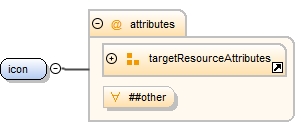
<xs:complexType name="ContentMetadataType"><xs:annotation><xs:documentation>The type for a basic set of metadata properties about the content</xs:documentation></xs:annotation><xs:sequence><xs:element ref="icon" minOccurs="0"/><xs:group ref="AdministrativeMetadataGroup"/><xs:any namespace="##other" processContents="lax" minOccurs="0" maxOccurs="unbounded"/></xs:sequence><xs:anyAttribute namespace="##other" processContents="lax"/></xs:complexType>
<xs:simpleType name="Int1to9Type"><xs:annotation><xs:documentation>The type of an integer in the range 1...9.</xs:documentation></xs:annotation><xs:restriction base="xs:integer"><xs:minInclusive value="1"/><xs:maxInclusive value="9"/></xs:restriction></xs:simpleType>
ANY attribute from ANY namespace OTHER than 'http://iptc.org/std/nar/2006-10-01/'
Source
<xs:complexType name="TruncatedDateTimePropType"><xs:annotation><xs:documentation>The type of a calendar date with an optional time part which may be truncated from the seconds part to the month part</xs:documentation></xs:annotation><xs:simpleContent><xs:extension base="TruncatedDateTimeType"><xs:anyAttribute namespace="##other" processContents="lax"/></xs:extension><!-- version 2: editAttributes added--></xs:simpleContent></xs:complexType>
<xs:simpleType name="TruncatedDateTimeType"><xs:annotation><xs:documentation>The type of a calendar date with an optional time part which may be truncated from the second part to the month part</xs:documentation></xs:annotation><xs:union memberTypes="xs:date xs:dateTime xs:gYearMonth xs:gYear"/></xs:simpleType>
The date (and, optionally, the time) after which the concept identifier should not be applied as the value of a property anymore.
Source
<xs:complexType name="ConceptIdType"><xs:annotation><xs:documentation>The type for a preferred unambiguous identifier for the concept.</xs:documentation></xs:annotation><xs:attribute name="qcode" type="QCodeType" use="required"/><xs:attribute name="created" type="DateOptTimeType"><xs:annotation><xs:documentation>The date (and, optionally, the time) when the concept identifier was created.</xs:documentation></xs:annotation></xs:attribute><xs:attribute name="retired" type="DateOptTimeType"><xs:annotation><xs:documentation>The date (and, optionally, the time) after which the concept identifier should not be applied as the value of a property anymore.</xs:documentation></xs:annotation></xs:attribute><xs:anyAttribute namespace="##other" processContents="lax"/></xs:complexType>
<xs:simpleType name="DateOptTimeType"><xs:annotation><xs:documentation>The type of a date (required) and a time (optional).</xs:documentation></xs:annotation><xs:union memberTypes="xs:date xs:dateTime"/></xs:simpleType>
A refinement of the semantics of a contact information.
Source
<xs:complexType name="ContactInfoType"><xs:annotation><xs:documentation>The type for information to get in contact with a party (Type defined in this XML Schema only)</xs:documentation></xs:annotation><xs:sequence><xs:choice minOccurs="0" maxOccurs="unbounded"><xs:element name="email" type="ElectronicAddressType"><xs:annotation><xs:documentation>An email address.</xs:documentation></xs:annotation></xs:element><xs:element name="im" type="ElectronicAddressType"><xs:annotation><xs:documentation>An instant messaging address.</xs:documentation></xs:annotation></xs:element><xs:element name="phone" type="ElectronicAddressType"><xs:annotation><xs:documentation>A phone number, preferred in an international format.</xs:documentation></xs:annotation></xs:element><xs:element name="fax" type="ElectronicAddressType"><xs:annotation><xs:documentation>A fax number, preferred in an international format.</xs:documentation></xs:annotation></xs:element><xs:element name="web"><xs:annotation><xs:documentation>A web address.</xs:documentation></xs:annotation><xs:complexType><xs:simpleContent><xs:extension base="IRIType"><xs:attribute name="role" type="QCodeType"><xs:annotation><xs:documentation>A refinement of the semantics of the web address.</xs:documentation></xs:annotation></xs:attribute><xs:anyAttribute namespace="##other" processContents="lax"/></xs:extension></xs:simpleContent></xs:complexType></xs:element><xs:element name="address"><xs:annotation><xs:documentation>A postal address.</xs:documentation></xs:annotation><xs:complexType><xs:sequence><xs:element name="line" type="IntlStringType" minOccurs="0" maxOccurs="unbounded"><xs:annotation><xs:documentation>A line of address information, in the format expected by a recipient postal service. City, country area, country and postal code are expressed separately.</xs:documentation></xs:annotation></xs:element><xs:element name="locality" type="FlexPropType" minOccurs="0"><xs:annotation><xs:documentation>A city/town/village etc. part of the address.</xs:documentation></xs:annotation></xs:element><xs:element name="area" type="FlexPropType" minOccurs="0"><xs:annotation><xs:documentation>A subdivision of a country part of the address.</xs:documentation></xs:annotation></xs:element><xs:element name="country" type="FlexPropType" minOccurs="0"><xs:annotation><xs:documentation>A country part of the address.</xs:documentation></xs:annotation></xs:element><xs:element name="postalCode" type="IntlStringType" minOccurs="0"><xs:annotation><xs:documentation>A postal code part of the address.</xs:documentation></xs:annotation></xs:element></xs:sequence><xs:attribute name="role" type="QCodeType"><xs:annotation><xs:documentation>A refinement of the semantics of the postal address.</xs:documentation></xs:annotation></xs:attribute><xs:anyAttribute namespace="##other" processContents="lax"/></xs:complexType></xs:element><!-- EV-NAR-1.3.1: Add note to contactInfo--><xs:element ref="note"><xs:annotation><xs:documentation>Additional natural language information.</xs:documentation></xs:annotation></xs:element></xs:choice><xs:any namespace="##other" processContents="lax" minOccurs="0" maxOccurs="unbounded"/></xs:sequence><xs:attribute name="role" type="QCodeType"><xs:annotation><xs:documentation>A refinement of the semantics of a contact information.</xs:documentation></xs:annotation></xs:attribute><xs:anyAttribute namespace="##other" processContents="lax"/><!-- version 2: flag power deleted on role--></xs:complexType>
A refinement of the semantics of the electronic address.
Source
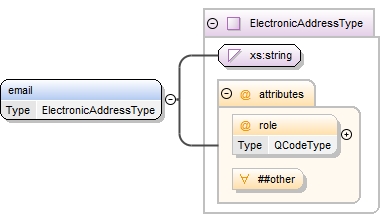
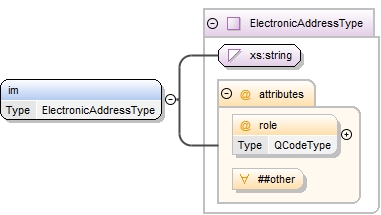
<xs:complexType name="ElectronicAddressType"><xs:annotation><xs:documentation>The type for an electronic address</xs:documentation></xs:annotation><xs:simpleContent><xs:extension base="xs:string"><xs:attribute name="role" type="QCodeType"><xs:annotation><xs:documentation>A refinement of the semantics of the electronic address.</xs:documentation></xs:annotation></xs:attribute><xs:anyAttribute namespace="##other" processContents="lax"/></xs:extension></xs:simpleContent></xs:complexType>
<xs:complexType name="GeoCoordinatesType"><xs:annotation><xs:documentation>The type for geographic coordinates (Type defined in this XML Schema only)</xs:documentation></xs:annotation><xs:sequence><xs:any namespace="##other" processContents="lax" minOccurs="0" maxOccurs="unbounded"/></xs:sequence><xs:attribute name="latitude" type="xs:decimal" use="required"><xs:annotation><xs:documentation>The latitude in decimal degrees.</xs:documentation></xs:annotation></xs:attribute><xs:attribute name="longitude" type="xs:decimal" use="required"><xs:annotation><xs:documentation>The longitude in decimal degrees.</xs:documentation></xs:annotation></xs:attribute><xs:attribute name="altitude" type="xs:integer"><xs:annotation><xs:documentation>The altitude in meters above the zero elevation of the reference system (sea level).</xs:documentation></xs:annotation></xs:attribute><xs:attribute name="gpsdatum" type="xs:string"><xs:annotation><xs:documentation>The GPS datum associated with the measure.</xs:documentation></xs:annotation></xs:attribute><xs:anyAttribute namespace="##other" processContents="lax"/></xs:complexType>
<xs:simpleType name="UnionDateTimeType"><xs:annotation><xs:documentation>The base type for approximate dates.</xs:documentation></xs:annotation><xs:union memberTypes="xs:dateTime xs:date xs:gYearMonth xs:gYear xs:gMonth xs:gMonthDay xs:gDay"/></xs:simpleType>
<xs:simpleType name="Int100Type"><xs:annotation><xs:documentation>The type of an integer in the range 0...100.</xs:documentation></xs:annotation><xs:restriction base="xs:integer"><xs:minInclusive value="0"/><xs:maxInclusive value="100"/></xs:restriction></xs:simpleType>
ANY attribute from ANY namespace OTHER than 'http://iptc.org/std/nar/2006-10-01/'
Source
<xs:complexType name="DateOptTimePropType"><xs:annotation><xs:documentation>The type of a property with a date (required) and a time (optional)</xs:documentation></xs:annotation><xs:simpleContent><xs:extension base="DateOptTimeType"><xs:anyAttribute namespace="##other" processContents="lax"/></xs:extension><!-- version 2: editAttributes added--></xs:simpleContent></xs:complexType>
The date (and optionally time) at which the approximation range begins.
Source
<xs:complexType name="ApproximateDateTimePropType"><xs:annotation><xs:documentation>The type of a calendar date with an optional time part and with an optional approximation range for the date.</xs:documentation></xs:annotation><xs:simpleContent><xs:extension base="UnionDateTimeType"><xs:attribute name="approxstart" type="TruncatedDateTimeType" use="optional"><xs:annotation><xs:documentation>The date (and optionally time) at which the approximation range begins.</xs:documentation></xs:annotation></xs:attribute><xs:attribute name="approxend" type="TruncatedDateTimeType" use="optional"><xs:annotation><xs:documentation>The date (and optionally the time) at which the approximation range ends.</xs:documentation></xs:annotation></xs:attribute><xs:anyAttribute namespace="##other" processContents="lax"/></xs:extension><!-- version 2: editAttributes added--></xs:simpleContent></xs:complexType>
The type of the concept assigned as property value.
Source
<xs:complexType name="TypedQualPropType"><xs:annotation><xs:documentation>The type for a property with a QCode, a type and optional names</xs:documentation></xs:annotation><xs:complexContent><xs:extension base="QualPropType"><xs:attribute name="type" type="QCodeType"><xs:annotation><xs:documentation>The type of the concept assigned as property value.</xs:documentation></xs:annotation></xs:attribute></xs:extension></xs:complexContent></xs:complexType>
<xs:simpleType name="BySecondListType"><xs:annotation><xs:documentation>The type for the BYSECOND rule part of iCalendar - see http://www.ietf.org/rfc/rfc2445.txt</xs:documentation></xs:annotation><xs:list><xs:simpleType><xs:annotation><xs:documentation>the datatype for a single token in BYSECOND of iCalendar - see http://www.ietf.org/rfc/rfc2445.txt</xs:documentation></xs:annotation><xs:restriction base="xs:nonNegativeInteger"><xs:minInclusive value="0"/><xs:maxInclusive value="59"/></xs:restriction></xs:simpleType></xs:list></xs:simpleType>
<xs:simpleType name="ByMinuteListType"><xs:annotation><xs:documentation>The type for the BYMINUTE rule part of iCalendar - see http://www.ietf.org/rfc/rfc2445.txt</xs:documentation></xs:annotation><xs:list><xs:simpleType><xs:annotation><xs:documentation>The datatype for a single token in BYMINUTE of iCalendar - see http://www.ietf.org/rfc/rfc2445.txt</xs:documentation></xs:annotation><xs:restriction base="xs:nonNegativeInteger"><xs:minInclusive value="0"/><xs:maxInclusive value="59"/></xs:restriction></xs:simpleType></xs:list></xs:simpleType>
<xs:simpleType name="ByHourListType"><xs:annotation><xs:documentation>The type for the BYHOUR rule part of iCalendar - see http://www.ietf.org/rfc/rfc2445.txt</xs:documentation></xs:annotation><xs:list><xs:simpleType><xs:annotation><xs:documentation>The datatype for a single token in BYHOUR of iCalendar - see http://www.ietf.org/rfc/rfc2445.txt.</xs:documentation></xs:annotation><xs:restriction base="xs:nonNegativeInteger"><xs:minInclusive value="0"/><xs:maxInclusive value="23"/></xs:restriction></xs:simpleType></xs:list></xs:simpleType>
<xs:simpleType name="ByDayListType"><xs:annotation><xs:documentation>The type for the BYDAY rule part of iCalendar - see http://www.ietf.org/rfc/rfc2445.txt</xs:documentation></xs:annotation><xs:list><xs:simpleType><xs:annotation><xs:documentation>The datatype for a single token in BYDAY of iCalendar - see http://www.ietf.org/rfc/rfc2445.txt.</xs:documentation></xs:annotation><xs:restriction base="xs:string"><xs:pattern value="(\-|\+)?([0-9]){0,2}(MO|TU|WE|TH|FR|SA|SU)"/></xs:restriction></xs:simpleType></xs:list></xs:simpleType>
<xs:simpleType name="ByMonthDayListType"><xs:annotation><xs:documentation>The type for the BYMONTHDAY rule part of iCalendar - see http://www.ietf.org/rfc/rfc2445.txt.</xs:documentation></xs:annotation><xs:list><xs:simpleType><xs:annotation><xs:documentation>The datatype for a single token in BYMONTHDAY of iCalendar - see http://www.ietf.org/rfc/rfc2445.txt.</xs:documentation></xs:annotation><xs:union><xs:simpleType><xs:annotation><xs:documentation>bymonthdayPosType</xs:documentation><xs:documentation>Helper datatype for bymonthdayListType</xs:documentation></xs:annotation><xs:restriction base="xs:integer"><xs:minInclusive value="1"/><xs:maxInclusive value="31"/></xs:restriction></xs:simpleType><xs:simpleType><xs:annotation><xs:documentation>bymonthdayNegType</xs:documentation><xs:documentation>Helper datatype for bymonthdayListType</xs:documentation></xs:annotation><xs:restriction base="xs:integer"><xs:minInclusive value="-31"/><xs:maxInclusive value="-1"/></xs:restriction></xs:simpleType></xs:union></xs:simpleType></xs:list></xs:simpleType>
<xs:simpleType name="ByMonthListType"><xs:annotation><xs:documentation>The type for the BYMONTH rule part of iCalendar - see http://www.ietf.org/rfc/rfc2445.txt.</xs:documentation></xs:annotation><xs:list><xs:simpleType><xs:annotation><xs:documentation>The datatype for a single token in BYMONTH of iCalendar - see http://www.ietf.org/rfc/rfc2445.txt.</xs:documentation></xs:annotation><xs:restriction base="xs:nonNegativeInteger"><xs:minInclusive value="1"/><xs:maxInclusive value="12"/></xs:restriction></xs:simpleType></xs:list></xs:simpleType>
<xs:simpleType name="ByYearDayListType"><xs:annotation><xs:documentation>The type for the BYYEARDAY rule part of iCalendar - see http://www.ietf.org/rfc/rfc2445.txt</xs:documentation></xs:annotation><xs:list><xs:simpleType><xs:annotation><xs:documentation>The datatype for a single token in BYYEARDAYof iCalendar - see http://www.ietf.org/rfc/rfc2445.txt</xs:documentation></xs:annotation><xs:union><xs:simpleType><xs:restriction base="xs:integer"><xs:minInclusive value="1"/><xs:maxInclusive value="366"/></xs:restriction></xs:simpleType><xs:simpleType><xs:restriction base="xs:integer"><xs:minInclusive value="-366"/><xs:maxInclusive value="-1"/></xs:restriction></xs:simpleType></xs:union></xs:simpleType></xs:list></xs:simpleType>
<xs:simpleType name="ByWeekNoListType"><xs:annotation><xs:documentation>The type for the BYWEEKNO rule part of iCalendar - see http://www.ietf.org/rfc/rfc2445.txt.</xs:documentation></xs:annotation><xs:list><xs:simpleType><xs:annotation><xs:documentation>The datatype for a single token in BYWEEKNO of iCalendar - see http://www.ietf.org/rfc/rfc2445.txt.</xs:documentation></xs:annotation><xs:union><xs:simpleType><xs:restriction base="xs:integer"><xs:minInclusive value="1"/><xs:maxInclusive value="53"/></xs:restriction></xs:simpleType><xs:simpleType><xs:restriction base="xs:integer"><xs:minInclusive value="-53"/><xs:maxInclusive value="-1"/></xs:restriction></xs:simpleType></xs:union></xs:simpleType></xs:list></xs:simpleType>
<xs:simpleType name="BySetposListType"><xs:annotation><xs:documentation>The type for the BYSETPOS rule part of iCalendar - see http://www.ietf.org/rfc/rfc2445.txt.</xs:documentation></xs:annotation><xs:list><xs:simpleType><xs:annotation><xs:documentation>The datatype for a single token in BYSETPOS of iCalendar - see http://www.ietf.org/rfc/rfc2445.txt.</xs:documentation></xs:annotation><xs:union><xs:simpleType><xs:restriction base="xs:integer"><xs:minInclusive value="1"/><xs:maxInclusive value="366"/></xs:restriction></xs:simpleType><xs:simpleType><xs:restriction base="xs:integer"><xs:minInclusive value="-366"/><xs:maxInclusive value="-1"/></xs:restriction></xs:simpleType></xs:union></xs:simpleType></xs:list></xs:simpleType>
<xs:attribute name="role" type="QCodeType"><xs:annotation><xs:documentation>A refinement of the semantics of the label.</xs:documentation></xs:annotation></xs:attribute>
<xs:attribute name="href" type="IRIType" use="required"><xs:annotation><xs:documentation>A hyperlink to a remote Catalog.</xs:documentation></xs:annotation></xs:attribute>
<xs:attribute name="alias" type="xs:NCName" use="required"><xs:annotation><xs:documentation>A short string used by the provider as a replacement for a scheme URI.</xs:documentation></xs:annotation></xs:attribute>
<xs:attribute name="uri" type="IRIType" use="required"><xs:annotation><xs:documentation>The URI which identifies the scheme.</xs:documentation></xs:annotation></xs:attribute>
<xs:attribute name="additionalInfo" type="IRIType"><xs:annotation><xs:documentation>A pointer to some additional information about the Catalog, and especially its evolution and latest version.</xs:documentation></xs:annotation></xs:attribute>
<xs:attribute name="qcode" type="QCodeType"><xs:annotation><xs:documentation>A qualified code which identifies a concept.</xs:documentation></xs:annotation></xs:attribute>
<xs:attribute name="literal" type="xs:normalizedString"><xs:annotation><xs:documentation>A free-text value assigned as property value.</xs:documentation></xs:annotation></xs:attribute>
<xs:attribute name="type" type="QCodeType"><xs:annotation><xs:documentation>The type of the concept assigned as controlled property value.</xs:documentation></xs:annotation></xs:attribute>
<xs:attribute name="role" type="QCodeType"><xs:annotation><xs:documentation>A refinement of the semantics of the block.</xs:documentation></xs:annotation></xs:attribute>
<xs:attribute name="qcode" type="QCodeType" use="required"><xs:annotation><xs:documentation>A qualified code which identifies a concept.</xs:documentation></xs:annotation></xs:attribute>
<xs:attribute name="rel" type="QCodeType"><xs:annotation><xs:documentation>The identifier of the relationship between the current Item and the target resource.</xs:documentation></xs:annotation></xs:attribute>
<xs:attribute name="href" type="IRIType"><xs:annotation><xs:documentation>The locator of the target resource.</xs:documentation></xs:annotation></xs:attribute>
<xs:attribute name="residref" type="xs:string"><xs:annotation><xs:documentation>The provider’s identifier of the target resource.</xs:documentation></xs:annotation></xs:attribute>
<xs:attribute name="version" type="xs:positiveInteger"><xs:annotation><xs:documentation>The version of the target resource. By default, the latest revision is retrieved when the link is activated.</xs:documentation></xs:annotation></xs:attribute>
<xs:attribute name="contenttype" type="xs:string"><xs:annotation><xs:documentation>The IANA (Internet Assigned Numbers Authority) MIME type of the target resource.</xs:documentation></xs:annotation></xs:attribute>
<xs:attribute name="format" type="QCodeType"><xs:annotation><xs:documentation>A refinement of a generic content type (i.e. IANA MIME type)</xs:documentation></xs:annotation></xs:attribute>
<xs:attribute name="size" type="xs:nonNegativeInteger"><xs:annotation><xs:documentation>The size in bytes of the target resource.</xs:documentation></xs:annotation></xs:attribute>
<xs:attribute name="guidref" type="xs:string"><xs:annotation><xs:documentation>The use of this attribute is DEPRECATED, use @residref instead. (was: The globally unique Identifier of the target Item.)</xs:documentation></xs:annotation></xs:attribute>
<xs:attribute name="hreftype" type="xs:string"><xs:annotation><xs:documentation>The use of this attribute is DEPRECATED, use @contenttype instead. (was: An IANA MIME type.)</xs:documentation></xs:annotation></xs:attribute>
<xs:attribute name="standard" type="xs:string" use="required"><xs:annotation><xs:documentation>The IPTC standard with which the Item is conformant.</xs:documentation></xs:annotation></xs:attribute>
<xs:attribute name="standardversion" use="required"><xs:annotation><xs:documentation>The major-minor version of the IPTC standard with which the Item is conformant.</xs:documentation></xs:annotation><xs:simpleType><xs:restriction base="xs:string"><xs:pattern value="[0-9]+\.[0-9]+"/></xs:restriction></xs:simpleType></xs:attribute>
<xs:attribute name="conformance" type="xs:string" default="core"><xs:annotation><xs:documentation>The conformance level with which the Item is conformant.</xs:documentation></xs:annotation></xs:attribute>
<xs:attribute name="guid" type="xs:string" use="required"><xs:annotation><xs:documentation>The persistent, universally unique identifier common for all versions of the Item.</xs:documentation></xs:annotation></xs:attribute>
<xs:attribute name="version" type="xs:positiveInteger" default="1"><xs:annotation><xs:documentation>The version of the Item.</xs:documentation></xs:annotation></xs:attribute>
<xs:attribute name="created" type="DateOptTimeType"><xs:annotation><xs:documentation>The date (and, optionally, the time) when the concept identifier was created.</xs:documentation></xs:annotation></xs:attribute>
<xs:attribute name="retired" type="DateOptTimeType"><xs:annotation><xs:documentation>The date (and, optionally, the time) after which the concept identifier should not be applied as the value of a property anymore.</xs:documentation></xs:annotation></xs:attribute>
<xs:attribute name="rel" type="QCodeType"><xs:annotation><xs:documentation>The identifier of the relationship between the current concept (containing the facet) and the concept identified by the facet value.</xs:documentation></xs:annotation></xs:attribute>
<xs:attribute name="role" type="QCodeType"><xs:annotation><xs:documentation>A refinement of the semantics of the electronic address.</xs:documentation></xs:annotation></xs:attribute>
<xs:attribute name="role" type="QCodeType"><xs:annotation><xs:documentation>A refinement of the semantics of the web address.</xs:documentation></xs:annotation></xs:attribute>
<xs:attribute name="role" type="QCodeType"><xs:annotation><xs:documentation>A refinement of the semantics of the postal address.</xs:documentation></xs:annotation></xs:attribute>
<xs:attribute name="role" type="QCodeType"><xs:annotation><xs:documentation>A refinement of the semantics of a contact information.</xs:documentation></xs:annotation></xs:attribute>
<xs:attribute name="latitude" type="xs:decimal" use="required"><xs:annotation><xs:documentation>The latitude in decimal degrees.</xs:documentation></xs:annotation></xs:attribute>
<xs:attribute name="altitude" type="xs:integer"><xs:annotation><xs:documentation>The altitude in meters above the zero elevation of the reference system (sea level).</xs:documentation></xs:annotation></xs:attribute>
<xs:attribute name="gpsdatum" type="xs:string"><xs:annotation><xs:documentation>The GPS datum associated with the measure.</xs:documentation></xs:annotation></xs:attribute>
<xs:attribute name="tag" type="xs:language" use="required"><xs:annotation><!-- v1.2 : modification of the definition--><xs:documentation>The language tag. Values must be valid BCP 47 language tags</xs:documentation></xs:annotation></xs:attribute>
<xs:attribute name="separator" type="xs:string"><xs:annotation><xs:documentation>The character string acting as a separator between the tokens in the slugline.</xs:documentation></xs:annotation></xs:attribute>
<xs:attribute name="approxstart" type="TruncatedDateTimeType" use="optional"><xs:annotation><xs:documentation>The date (and optionally time) at which the approximation range begins.</xs:documentation></xs:annotation></xs:attribute>
<xs:attribute name="approxend" type="TruncatedDateTimeType" use="optional"><xs:annotation><xs:documentation>The date (and optionally the time) at which the approximation range ends.</xs:documentation></xs:annotation></xs:attribute>
<xs:attribute name="type" type="QCodeType"><xs:annotation><xs:documentation>The type of the concept assigned as property value.</xs:documentation></xs:annotation></xs:attribute>
<xs:attribute name="freq" use="required"><xs:annotation><xs:documentation>The FREQ rule part identifies the type of recurrence rule.</xs:documentation></xs:annotation><xs:simpleType><xs:restriction base="xs:string"><xs:enumeration value="SECONDLY"/><xs:enumeration value="MINUTELY"/><xs:enumeration value="HOURLY"/><xs:enumeration value="DAILY"/><xs:enumeration value="WEEKLY"/><xs:enumeration value="MONTHLY"/><xs:enumeration value="YEARLY"/></xs:restriction></xs:simpleType></xs:attribute>
<xs:attribute name="interval" type="xs:positiveInteger"><xs:annotation><xs:documentation>The INTERVAL rule part contains a positive integer representing how often the recurrence rule repeats.</xs:documentation></xs:annotation></xs:attribute>
<xs:attribute name="until" type="DateOptTimeType"><xs:annotation><xs:documentation>The UNTIL rule part defines a date-time value which bounds the recurrence rule in an inclusive manner.</xs:documentation></xs:annotation></xs:attribute>
<xs:attribute name="count" type="xs:positiveInteger"><xs:annotation><xs:documentation>The COUNT rule part defines the number of occurrences at which to range-bound the recurrence.</xs:documentation></xs:annotation></xs:attribute>
<xs:attribute name="bysecond"><xs:annotation><xs:documentation>The BYSECOND rule part specifies a space separated list of seconds within a minute</xs:documentation></xs:annotation><xs:simpleType><xs:restriction base="BySecondListType"><xs:minLength value="1"/></xs:restriction></xs:simpleType></xs:attribute>
<xs:attribute name="byminute"><xs:annotation><xs:documentation>The BYMINUTE rule part specifies a space separated list of minutes within an hour.</xs:documentation></xs:annotation><xs:simpleType><xs:restriction base="ByMinuteListType"><xs:minLength value="1"/></xs:restriction></xs:simpleType></xs:attribute>
<xs:attribute name="byhour"><xs:annotation><xs:documentation>The BYHOUR rule part specifies space separated list of hours of the day.</xs:documentation></xs:annotation><xs:simpleType><xs:restriction base="ByHourListType"><xs:minLength value="1"/></xs:restriction></xs:simpleType></xs:attribute>
<xs:attribute name="byday"><xs:annotation><xs:documentation>The BYDAY rule part specifies a space separated list of days of the week</xs:documentation></xs:annotation><xs:simpleType><xs:restriction base="ByDayListType"><xs:minLength value="1"/></xs:restriction></xs:simpleType></xs:attribute>
<xs:attribute name="bymonthday"><xs:annotation><xs:documentation>The BYMONTHDAY rule part specifies a space separated list of days of the month.</xs:documentation></xs:annotation><xs:simpleType><xs:restriction base="ByMonthDayListType"><xs:minLength value="1"/></xs:restriction></xs:simpleType></xs:attribute>
<xs:attribute name="bymonth"><xs:annotation><xs:documentation>The BYMONTH rule part specifies a space separated list of months of the year.</xs:documentation></xs:annotation><xs:simpleType><xs:restriction base="ByMonthListType"><xs:minLength value="1"/></xs:restriction></xs:simpleType></xs:attribute>
<xs:attribute name="byyearday"><xs:annotation><xs:documentation>The BYYEARDAY rule part specifies a space separated list of days of the year.</xs:documentation></xs:annotation><xs:simpleType><xs:restriction base="ByYearDayListType"><xs:minLength value="1"/></xs:restriction></xs:simpleType></xs:attribute>
<xs:attribute name="byweekno"><xs:annotation><xs:documentation>The BYWEEKNO rule part specifies a space separated list of ordinals specifying weeks of the year.</xs:documentation></xs:annotation><xs:simpleType><xs:restriction base="ByWeekNoListType"><xs:minLength value="1"/></xs:restriction></xs:simpleType></xs:attribute>
The BYSETPOS rule part specifies a space separated list of values which corresponds to the nth occurrence within the set of events specified by the rule.
<xs:attribute name="bysetpos"><xs:annotation><xs:documentation>The BYSETPOS rule part specifies a space separated list of values which corresponds to the nth occurrence within the set of events specified by the rule.</xs:documentation></xs:annotation><xs:simpleType><xs:restriction base="BySetposListType"><xs:minLength value="1"/></xs:restriction></xs:simpleType></xs:attribute>
<xs:attribute name="wkst"><xs:annotation><xs:documentation>The WKST rule part specifies the day on which the workweek starts.</xs:documentation></xs:annotation><xs:simpleType><xs:restriction base="xs:string"><xs:enumeration value="MO"/><xs:enumeration value="TU"/><xs:enumeration value="WE"/><xs:enumeration value="TH"/><xs:enumeration value="FR"/><xs:enumeration value="SA"/><xs:enumeration value="SU"/></xs:restriction></xs:simpleType></xs:attribute>
<xs:group name="ItemManagementGroup"><xs:annotation><xs:documentation>A group of properties for the management of the item</xs:documentation></xs:annotation><xs:sequence><xs:element ref="itemClass"/><xs:element ref="provider"/><xs:element ref="versionCreated"/><xs:element ref="firstCreated" minOccurs="0"/><xs:element ref="embargoed" minOccurs="0"/><xs:element ref="pubStatus" minOccurs="0"/><xs:element ref="role" minOccurs="0"/><xs:element ref="fileName" minOccurs="0"/><xs:element ref="service" minOccurs="0" maxOccurs="unbounded"/><xs:element ref="title" minOccurs="0" maxOccurs="unbounded"><xs:annotation><xs:documentation>A short natural language name for the Item.</xs:documentation></xs:annotation></xs:element><xs:element ref="edNote" minOccurs="0" maxOccurs="unbounded"/></xs:sequence></xs:group>
<xs:group name="AdministrativeMetadataGroup"><xs:annotation><xs:documentation>A group of properties associated with the administrative facet of content.</xs:documentation></xs:annotation><xs:sequence><xs:element ref="urgency" minOccurs="0"/><xs:element ref="contentCreated" minOccurs="0"/><xs:element ref="contentModified" minOccurs="0"/><xs:choice minOccurs="0" maxOccurs="unbounded"><xs:element ref="located"/><xs:element ref="infoSource"/><xs:element ref="creator"><xs:annotation><xs:documentation>A party (person or organisation) which created the content, preferably the name of a person (e.g. a photographer for photos, a graphic artist for graphics, or a writer for textual news).</xs:documentation></xs:annotation></xs:element><xs:element ref="contributor"/><xs:element ref="audience"/></xs:choice></xs:sequence></xs:group>
<xs:group name="ConceptRelationshipsGroup"><xs:annotation><xs:documentation>A group of properites required to indicate relationships of the concept to other concepts</xs:documentation></xs:annotation><xs:sequence><xs:choice minOccurs="0" maxOccurs="unbounded"><xs:element ref="sameAs"/><xs:element ref="broader"/><xs:element ref="narrower"/><xs:element ref="related"/></xs:choice></xs:sequence></xs:group>
<xs:group name="EntityDetailsGroup"><xs:annotation><xs:documentation>A group of properties to define the details of specific entities</xs:documentation></xs:annotation><xs:choice><xs:element ref="personDetails"/><xs:element ref="organisationDetails"/><xs:element ref="geoAreaDetails"/><xs:element ref="POIDetails"/><xs:element ref="objectDetails"/></xs:choice></xs:group>
<xs:group name="DescriptiveMetadataGroup"><xs:annotation><xs:documentation>A group of properties associated with the descriptive facet of content.</xs:documentation></xs:annotation><xs:sequence><xs:choice minOccurs="0" maxOccurs="unbounded"><xs:element ref="language"/><xs:element ref="genre"/><xs:element ref="subject"/><xs:element ref="slugline"/><xs:element ref="headline"/><xs:element ref="dateline"/><xs:element ref="by"/><xs:element ref="creditline"/><xs:element ref="description"/></xs:choice></xs:sequence></xs:group>
<xs:group name="RecurrenceGroup"><xs:annotation><xs:documentation>A group of elements to express a recurrence (Group defined in this XML Schema only)</xs:documentation></xs:annotation><xs:sequence><xs:choice maxOccurs="unbounded"><xs:annotation><xs:documentation>This choice and its cardinality requires that there is at least one rDate or rRule element present.</xs:documentation></xs:annotation><xs:element name="rDate" type="DateOptTimePropType"><xs:annotation><xs:documentation>Explicit dates of recurrence.</xs:documentation></xs:annotation></xs:element><xs:element name="rRule"><xs:annotation><xs:documentation>Rule for recurrence.</xs:documentation></xs:annotation><xs:complexType><xs:attributeGroup ref="recurrenceRuleAttributes"/><xs:anyAttribute namespace="##other" processContents="lax"/></xs:complexType></xs:element></xs:choice><xs:choice minOccurs="0" maxOccurs="unbounded"><xs:element name="exDate" type="DateOptTimePropType"><xs:annotation><xs:documentation>Explicit dates to be excluded from any recurrence.</xs:documentation></xs:annotation></xs:element><xs:element name="exRule"><xs:annotation><xs:documentation>Rule for dates to be excluded from recurrence.</xs:documentation></xs:annotation><xs:complexType><xs:attributeGroup ref="recurrenceRuleAttributes"/><xs:anyAttribute namespace="##other" processContents="lax"/></xs:complexType></xs:element></xs:choice></xs:sequence></xs:group>
Attempting to install the relevant ISO 2- and 3-letter codes as the enumerated possible values is probably never going to be a realistic possibility. See RFC 3066 at http://www.ietf.org/rfc/rfc3066.txt and the IANA registry at http://www.iana.org/assignments/lang-tag-apps.htm for further information. The union allows for the 'un-declaration' of xml:lang with the empty string.
Source
<xs:attributeGroup name="i18nAttributes"><xs:annotation><xs:documentation>A group of attributes for language and script related information</xs:documentation></xs:annotation><xs:attribute ref="xml:lang"><xs:annotation><xs:documentation>Specifies the language of this property and potentially all descendant properties. xml:lang values of descendant properties override this value. Values are determined by Internet BCP 47.</xs:documentation></xs:annotation></xs:attribute><xs:attribute name="dir"><xs:annotation><xs:documentation>The directionality of textual content.</xs:documentation></xs:annotation><xs:simpleType><xs:restriction base="xs:string"><xs:enumeration value="ltr"/><xs:enumeration value="rtl"/></xs:restriction></xs:simpleType></xs:attribute></xs:attributeGroup>
The type of the concept assigned as controlled property value.
Source
<xs:attributeGroup name="flexAttributes"><xs:annotation><xs:documentation>A group of attributes associated with flexible properties</xs:documentation></xs:annotation><xs:attribute name="qcode" type="QCodeType"><xs:annotation><xs:documentation>A qualified code which identifies a concept.</xs:documentation></xs:annotation></xs:attribute><xs:attribute name="literal" type="xs:normalizedString"><xs:annotation><xs:documentation>A free-text value assigned as property value.</xs:documentation></xs:annotation></xs:attribute><xs:attribute name="type" type="QCodeType"><xs:annotation><xs:documentation>The type of the concept assigned as controlled property value.</xs:documentation></xs:annotation></xs:attribute></xs:attributeGroup>
The version of the target resource. By default, the latest revision is retrieved when the link is activated.
Source
<xs:attributeGroup name="targetResourceAttributes"><xs:annotation><xs:documentation>A group of attributes pertaining to any kind of link</xs:documentation></xs:annotation><xs:attribute name="href" type="IRIType"><xs:annotation><xs:documentation>The locator of the target resource.</xs:documentation></xs:annotation></xs:attribute><xs:attribute name="residref" type="xs:string"><xs:annotation><xs:documentation>The provider’s identifier of the target resource.</xs:documentation></xs:annotation></xs:attribute><xs:attribute name="version" type="xs:positiveInteger"><xs:annotation><xs:documentation>The version of the target resource. By default, the latest revision is retrieved when the link is activated.</xs:documentation></xs:annotation></xs:attribute><xs:attribute name="contenttype" type="xs:string"><xs:annotation><xs:documentation>The IANA (Internet Assigned Numbers Authority) MIME type of the target resource.</xs:documentation></xs:annotation></xs:attribute><xs:attribute name="format" type="QCodeType"><xs:annotation><xs:documentation>A refinement of a generic content type (i.e. IANA MIME type)</xs:documentation></xs:annotation></xs:attribute><xs:attribute name="size" type="xs:nonNegativeInteger"><xs:annotation><xs:documentation>The size in bytes of the target resource.</xs:documentation></xs:annotation></xs:attribute></xs:attributeGroup>
The use of this attribute is DEPRECATED, use @contenttype instead. (was: An IANA MIME type.)
Source
<xs:attributeGroup name="deprecatedLinkAttributes"><xs:attribute name="guidref" type="xs:string"><xs:annotation><xs:documentation>The use of this attribute is DEPRECATED, use @residref instead. (was: The globally unique Identifier of the target Item.)</xs:documentation></xs:annotation></xs:attribute><xs:attribute name="hreftype" type="xs:string"><xs:annotation><xs:documentation>The use of this attribute is DEPRECATED, use @contenttype instead. (was: An IANA MIME type.)</xs:documentation></xs:annotation></xs:attribute></xs:attributeGroup>
The BYSETPOS rule part specifies a space separated list of values which corresponds to the nth occurrence within the set of events specified by the rule.
The WKST rule part specifies the day on which the workweek starts.
Source
<xs:attributeGroup name="recurrenceRuleAttributes"><xs:annotation><xs:documentation>A group of attributes aligning with iCalendar RECUR - see http://www.ietf.org/rfc/rfc2445.txt</xs:documentation></xs:annotation><xs:attribute name="freq" use="required"><xs:annotation><xs:documentation>The FREQ rule part identifies the type of recurrence rule.</xs:documentation></xs:annotation><xs:simpleType><xs:restriction base="xs:string"><xs:enumeration value="SECONDLY"/><xs:enumeration value="MINUTELY"/><xs:enumeration value="HOURLY"/><xs:enumeration value="DAILY"/><xs:enumeration value="WEEKLY"/><xs:enumeration value="MONTHLY"/><xs:enumeration value="YEARLY"/></xs:restriction></xs:simpleType></xs:attribute><xs:attribute name="interval" type="xs:positiveInteger"><xs:annotation><xs:documentation>The INTERVAL rule part contains a positive integer representing how often the recurrence rule repeats.</xs:documentation></xs:annotation></xs:attribute><xs:attribute name="until" type="DateOptTimeType"><xs:annotation><xs:documentation>The UNTIL rule part defines a date-time value which bounds the recurrence rule in an inclusive manner.</xs:documentation></xs:annotation></xs:attribute><xs:attribute name="count" type="xs:positiveInteger"><xs:annotation><xs:documentation>The COUNT rule part defines the number of occurrences at which to range-bound the recurrence.</xs:documentation></xs:annotation></xs:attribute><xs:attribute name="bysecond"><xs:annotation><xs:documentation>The BYSECOND rule part specifies a space separated list of seconds within a minute</xs:documentation></xs:annotation><xs:simpleType><xs:restriction base="BySecondListType"><xs:minLength value="1"/></xs:restriction></xs:simpleType></xs:attribute><xs:attribute name="byminute"><xs:annotation><xs:documentation>The BYMINUTE rule part specifies a space separated list of minutes within an hour.</xs:documentation></xs:annotation><xs:simpleType><xs:restriction base="ByMinuteListType"><xs:minLength value="1"/></xs:restriction></xs:simpleType></xs:attribute><xs:attribute name="byhour"><xs:annotation><xs:documentation>The BYHOUR rule part specifies space separated list of hours of the day.</xs:documentation></xs:annotation><xs:simpleType><xs:restriction base="ByHourListType"><xs:minLength value="1"/></xs:restriction></xs:simpleType></xs:attribute><xs:attribute name="byday"><xs:annotation><xs:documentation>The BYDAY rule part specifies a space separated list of days of the week</xs:documentation></xs:annotation><xs:simpleType><xs:restriction base="ByDayListType"><xs:minLength value="1"/></xs:restriction></xs:simpleType></xs:attribute><xs:attribute name="bymonthday"><xs:annotation><xs:documentation>The BYMONTHDAY rule part specifies a space separated list of days of the month.</xs:documentation></xs:annotation><xs:simpleType><xs:restriction base="ByMonthDayListType"><xs:minLength value="1"/></xs:restriction></xs:simpleType></xs:attribute><xs:attribute name="bymonth"><xs:annotation><xs:documentation>The BYMONTH rule part specifies a space separated list of months of the year.</xs:documentation></xs:annotation><xs:simpleType><xs:restriction base="ByMonthListType"><xs:minLength value="1"/></xs:restriction></xs:simpleType></xs:attribute><xs:attribute name="byyearday"><xs:annotation><xs:documentation>The BYYEARDAY rule part specifies a space separated list of days of the year.</xs:documentation></xs:annotation><xs:simpleType><xs:restriction base="ByYearDayListType"><xs:minLength value="1"/></xs:restriction></xs:simpleType></xs:attribute><xs:attribute name="byweekno"><xs:annotation><xs:documentation>The BYWEEKNO rule part specifies a space separated list of ordinals specifying weeks of the year.</xs:documentation></xs:annotation><xs:simpleType><xs:restriction base="ByWeekNoListType"><xs:minLength value="1"/></xs:restriction></xs:simpleType></xs:attribute><xs:attribute name="bysetpos"><xs:annotation><xs:documentation>The BYSETPOS rule part specifies a space separated list of values which corresponds to the nth occurrence within the set of events specified by the rule.</xs:documentation></xs:annotation><xs:simpleType><xs:restriction base="BySetposListType"><xs:minLength value="1"/></xs:restriction></xs:simpleType></xs:attribute><xs:attribute name="wkst"><xs:annotation><xs:documentation>The WKST rule part specifies the day on which the workweek starts.</xs:documentation></xs:annotation><xs:simpleType><xs:restriction base="xs:string"><xs:enumeration value="MO"/><xs:enumeration value="TU"/><xs:enumeration value="WE"/><xs:enumeration value="TH"/><xs:enumeration value="FR"/><xs:enumeration value="SA"/><xs:enumeration value="SU"/></xs:restriction></xs:simpleType></xs:attribute></xs:attributeGroup>